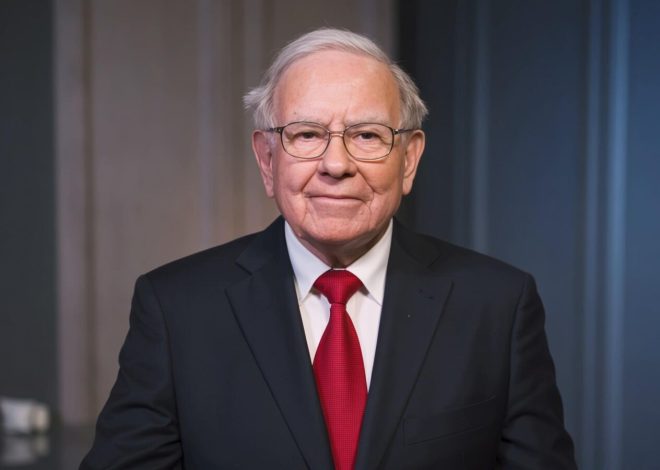
10 habits that rich people abandon after leaving the middle class
The move from middle class to wealth isn’t just about making more money. It’s about fundamentally changing the way you think, spend your time and make decisions. Research in studies of wealth creation reveals a consistent trend: self-made millionaires and billionaires are systematically abandoning certain behaviors that keep most people stuck in the middle class.
These changes occur intentionally, often before significant wealth accumulates, creating the foundation for exponential growth. Understanding these discarded habits provides a road map for anyone wanting to build lasting wealth.
Transitioning isn’t about working harder at the same things, but about making strategic changes to your daily habits and taking a long-term perspective. Here are the ten habits that the rich abandon after leaving the middle class.
1. Trade time for money with active income only
The rich stop relying exclusively on salaries or hourly wages. While middle-class individuals typically rely on trading their time for a salary, wealthy people are now focused on owning assets that generate passive income. This includes businesses, real estate, dividend-producing investments, royalties and intellectual property.
The fundamental difference is leverage. A salary caps your earning potential at the number of hours you can work multiplied by your hourly value. However, ownership allows your money and systems to operate independently of your direct investment of time. This shift represents the most important mental transition from employee thinking to investor thinking.
2. Consuming entertainment instead of creating value
Wealthy individuals significantly reduce the time spent on passive entertainment. They replace hours spent watching television, scrolling through social media, and recreationally browsing the Internet with activities that build skills, relationships, or assets. That’s not to say they never relax, but their default mode shifts from consumption to production.
The bourgeois pattern of coming home from work to spend several hours in front of a screen is gradually disappearing. Instead, wealthy people use their free time to read, exercise, work on side projects, or form relationships that advance their goals. Scrolling, watching and buying disappear as production, construction and selling take over.
3. Think in months rather than decades
Short-term thinking keeps people locked into middle-class patterns. The rich abandon immediate gratification in favor of a long-term strategy. They think in decades, even centuries, establishing trusts, creating family offices, and teaching their children about money from a young age.
This extended time horizon changes every decision. Rather than maximizing this year’s vacation or next month’s bonus, wealthy families are focused on preservation and generational wealth. They plant trees whose shade they may never enjoy, knowing that the compounding effects create extraordinary results over time.
4. Based on a single income stream
Middle class thinking equates to having a job that provides income. Rich thinking involves orchestrating multiple revenue streams simultaneously. A typical wealthy individual may combine their salary income with cash flow from rental properties, dividend payments from investments, business profits, and royalty income from intellectual property.
This diversification provides both security and acceleration. If one source of income collapses, others continue to flow. When all flows grow simultaneously, wealth accumulates at rates impossible to achieve through wage increases alone. The wealthy understand that financial independence requires sources of income that exist independently of their day job.
5. Having high interest debt
The wealthy systematically eliminate costly debt from their lives. Credit card balances, personal loans and any debt carrying interest rates higher than four or five percent are paid off aggressively. That doesn’t mean they’re avoiding all debt: wealthy individuals often resort to low-interest, tax-deductible debt, relying on appreciating assets, like real estate.
The distinction is crucial. Bad debts finance the depreciation of consumption and accumulate against you. Healthy debt finances, appreciates assets, and creates tax benefits while building equity. The wealthy cannot afford to pay 18-22% interest on a credit card because that money could otherwise benefit them through investments.
6. Play Safe at All Costs
Risk avoidance keeps people stuck. The rich stop protecting the status quo and start taking calculated, well-researched asymmetric bets. They understand that the biggest risk is not taking any risks in a changing economy.
This doesn’t mean playing recklessly. This means conducting thorough research, looking for asymmetric opportunities where the upside potential far outweighs the downside risk, and accepting that some businesses will inevitably fail. The middle class often finds itself in comfortable but limited situations: secure jobs with capped potential and safe investments with minimal returns. The wealthy recognize that calculated risks are the only path to exponential growth.
7. Saying “I can’t afford it.”
Rich people eliminate this phrase from their vocabulary and replace it with “How can I afford it?” » This linguistic shift encourages creative problem solving and the search for opportunities, rather than closing doors. When something seems unaffordable, the middle class response is resignation. The answer of the rich is strategic planning.
This doesn’t mean buying everything you want. This means approaching financial challenges as puzzles to be solved rather than obstacles to be accepted. The question “How can I afford it?” » could lead to discovering a new revenue stream, restructuring existing resources, or finding creative partnerships that make achieving goals more achievable.
8. Spending time with people who limit their ambitions
The wealthy curate their social circles intentionally, seeking mentors, peers, and networks of other high achievers. They stop spending time in groups that reinforce middle-class limitations and fears. The principle is simple: you become like the people you surround yourself with most often.
If your closest friends constantly complain about money, avoid risks, and settle for mediocrity, these patterns will influence your own thinking. Conversely, spending time with ambitious, successful, growth-oriented people raises your standards and broadens your vision of what’s possible. Rich people understand this and make decisions about their friendships accordingly.
9. Make Financial Decisions Based on Emotion
Middle-class individuals often view extra money as an opportunity to improve their lifestyle – by buying a nicer car, taking a more expensive vacation, or moving to a bigger house. The wealthy view unexpected money as an opportunity to acquire more income-producing assets.
This discipline requires separating emotional desires from strategic financial decisions. Lifestyle inflation destroys the dynamic of wealth creation, while the accumulation of strategic assets worsens it. The wealthy delay gratification, allowing their asset base to grow until passive income comfortably supports their desired lifestyle without touching capital.
10. Do everything themselves
The DIY mentality can actually cost more than it saves once you reach a certain income level. When a person can make a lot of money through professional work but spends hours on tasks that could be outsourced more cheaply, the economics make no sense. The wealthy recognize opportunity cost and delegate functions to others to save time.
This applies not only to household chores, but also to business operations, financial management and administrative tasks. Every hour spent on low-leverage activities is an hour not spent on high-leverage opportunities. The rich obsessively focus on their most profitable activities and systematically outsource everything else.
Conclusion
The gap between the middle class and the wealthy is not primarily about income, but rather about these habitual patterns. Once someone abandons these ten behaviors and replaces them with their opposites, the wealth gap widens quickly.
The most important change is moving from a consumer mentality to an owner-investor mentality, from short-term thinking to long-term strategy, from doing everything yourself to leveraging systems and people.
These changes do not require extraordinary intelligence or luck. They require intentional decision-making about how you spend your time, who you spend it with, and where you direct your resources. The rich didn’t get rich by chance: they systematically abandoned the habits that keep most people stuck.
Lifestyle
Agen Togel Terpercaya
Bandar Togel
Sabung Ayam Online
Berita Terkini
Artikel Terbaru
Berita Terbaru
Penerbangan
Berita Politik
Berita Politik
Software
Software Download
Download Aplikasi
Berita Terkini
News
Jasa PBN
Jasa Artikel