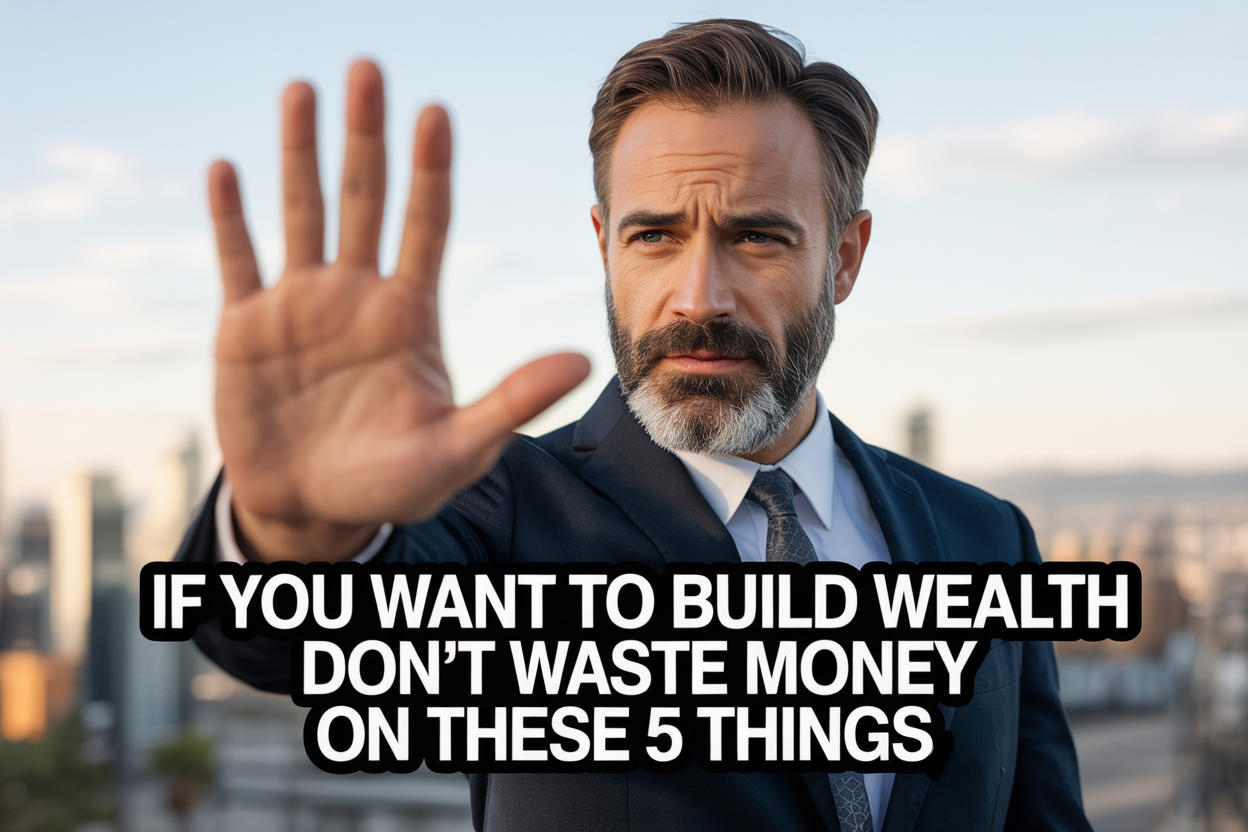
People who build wealth refuse to waste money on these 5 things
The construction of sustainable wealth is not to earn the highest salary or find the next great investment opportunity. Instead, it involves developing disciplined spending habits, prioritizing long -term financial growth compared to short -term gratuity.
Rich individuals regularly avoid certain expenses that drain their financial resources without providing significant yields. Understanding these models can help anyone to adopt a state of mind of wealth creation, regardless of the level of income. Here are the five things that people who want to build wealth refuse to waste their money:
1. They jump the lottery lines and reject the rich rich promises
People who aspire to build wealth understand that the construction of high net value requires patience and strategic thinking rather than hoping for miraculous manners. Mathematics behind lottery tickets reveal why wealth manufacturers are completely avoiding them. Most state lotters offer worse odds than in several million for jackpot prices, which makes them statistically equivalent to throwing money.
The opportunity cost of lottery expenses becomes staggering when calculated over the decades. Instead of buying tickets, the rich self-fabricated redirects these funds to investments with historically proven yields. They recognize that a coherent investment in diverse portfolios or index funds, although less exciting than dreaming of instant wealth, provides a reliable route to financial growth.
This same logic extends to obtain rich rich patterns, cryptocurrency games and speculative investments promising unrealistic yields. Wealth manufacturers prefer boring and predictable growth to exciting but improbable scenarios. They understand that sustainable wealth comes from the consumption growth, not from the luck of the lottery and structure their financial decisions accordingly.
2. They refuse to pay interest in the credit card and high interest debt
The interest of the credit card represents one of the most effective means of destroying wealth over time. Rich individuals treat credit cards as practical payment tools rather than borrowing instruments, generally paying for sale in full each month to completely avoid financing costs.
The composition of the credit card debt works devastatingly against the accumulation of wealth. While investments are made up in favor of the investor, compounds of high interest debt against the borrower. Rich people recognize this mathematical reality and structure their purchases to avoid these payments of wealth destructive interests.
When rich individuals use credit, they choose low -interest options for assets that appreciate or generate income, such as real estate or commercial investments. They distinguish productive debt which strengthens wealth and consumer debt that destroys it. This strategic approach to the loan allows them to take advantage of their financial resources effectively while avoiding the trap of the richness of the debt of high interest consumers.
3. They choose quality rather than the labels of designers and symbols of status
The rich include the difference between price and value, in particular with regard to brand luxury products. Rather than paying bonuses for designer logos, they focus on quality elements that offer higher sustainability and feature compared to the cost.
This approach extends beyond clothing to all discretionary purchases. The rich individuals assess the articles according to the cost by use rather than the initial price. A well -made element that lasts for years often offers better value than cheaper alternatives requiring frequent replacement, even if the initial cost is higher.
Purchases focused on status rarely align with the objectives of wealth creation because they prioritize the appearance of financial efficiency. Rich people often prefer discreet and quality elements that meet their needs without disseminating their economic status. This transition to mentality to impress others to optimizing value allows them to allocate more resources to investments that create wealth rather than simply display it.
4. They buy used cars instead of new vehicles
The damping of vehicles represents one of the most steep financial losses that most people readily accept. New cars lose significant value during the first year, which is among the worst investments. Rich individuals avoid this immediate financial hit by buying reliable used vehicles instead.
The total cost of the possession of vehicles extends far beyond the purchase price. Insurance premiums for new vehicles often exceed those of used cars, and luxury vehicles require costly maintenance and repairs. Rich people calculate these lifelong costs when making transport decisions, treating cars as necessary tools rather than symbols of status.
The opportunity cost of purchases of new vehicles becomes particularly significant when you consider alternative uses for this capital. The difference between new and used car payments when invested in a coherent manner over the decades, can generate substantial wealth thanks to composed growth. Rich individuals prefer to capture this growth rather than losing money due to damping.
5. They avoid oversized houses and the accumulation of excessive properties
The accommodation represents the most important expenses of most people, which makes it crucial for the construction of wealth. While everyone needs shelter, wealthy people are attempting to buy more houses they need or can use effectively.
Large houses carry maintenance costs, public services and proportionally higher property tax which continue long after the end of mortgage payments. These current expenses reduce money available for wealth creation investments. Rich people often choose houses of appropriate size in good places rather than huge houses that drain their resources.
The concept of being “rich in house but poor in cash” illustrates why excessive real estate investments can hinder the construction of wealth. Rich individuals prefer to maintain the liquidity and flexibility of investments rather than linking capital in oversized properties. They understand that the main residences are consumer expenses rather than investments and the size of these purchases accordingly.
Conclusion
The expenditure habits of rich individuals reflect a fundamental change in the mentality of consumption at the thought of investment. They systematically choose long -term financial growth compared to short -term satisfaction, understanding that each dollar spent in unnecessary articles represents a missed opportunity for the construction of wealth.
These principles are not limited to those who are already rich. Anyone can adopt these practices by assessing purchases through the lens of the opportunity cost and the long -term financial impact. The key lies in the distinction between expenses that strengthen wealth and those that destroy it, then regularly choose the way that supports long -term financial objectives.
The construction of wealth requires discipline and patience, but habits that create sustainable financial security are available for anyone who wants to prioritize future prosperity on current consumption.
Lifestyle
Game Center
Game News
Review Film
Berita Terkini
Berita Terkini
Berita Terkini
review anime
Gaming Center

Related Posts

Easy Teriyaki Chicken

Croissant Bacon Cheeseburgers | Don’t Go Bacon My Heart