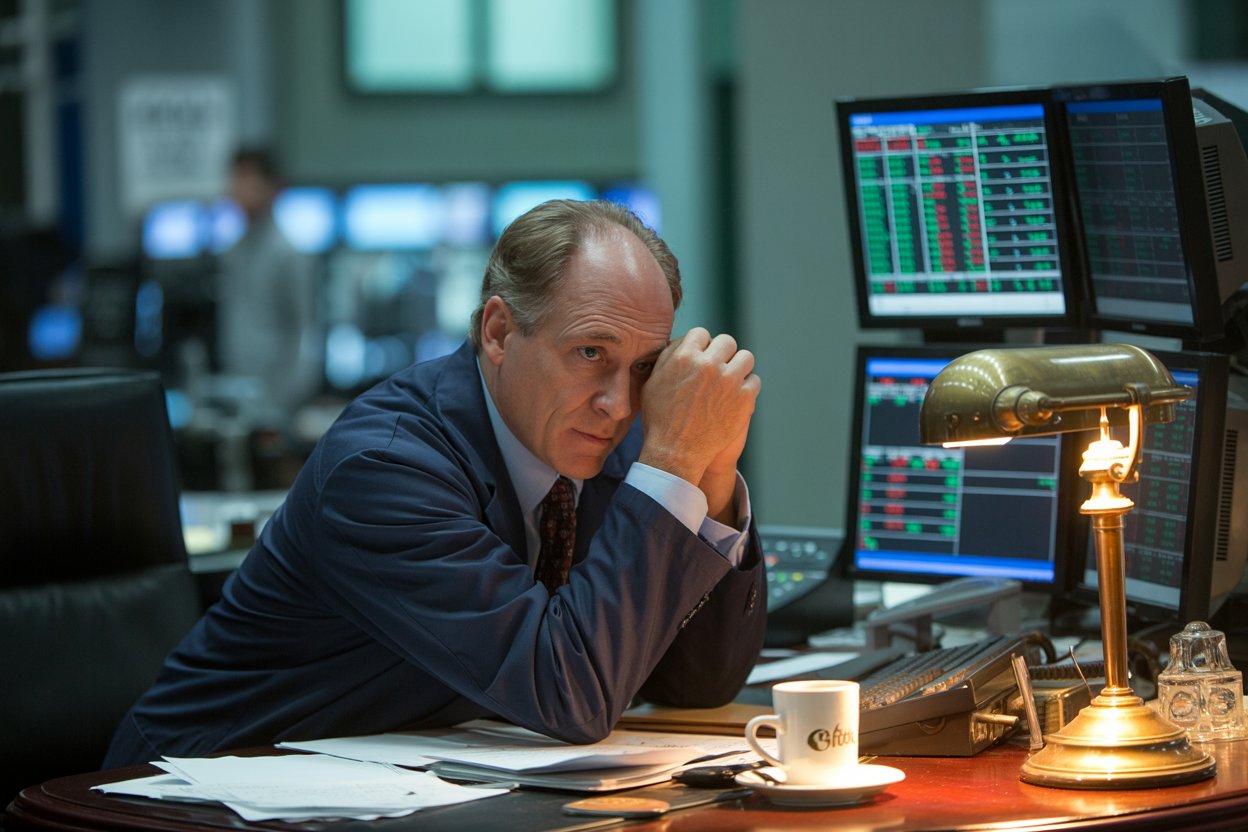
Ranking of the 5 most destructive emotions of a trader
Trading is often described as a battle between logic and emotion. Although technical analysis, fundamental research and risk management form the basis of successful trading, emotions can quickly undermine even the most sophisticated strategies. The difference between profitable traders and those who blow their accounts often comes down to emotional control. Understanding which emotions pose the greatest threat is the first step toward managing them effectively.
Every trader, from novice to professional, faces the same psychological challenges. Markets are designed to exploit human emotions, triggering fear at the bottom and greed at the top. The trader who controls his emotional reactions gains a significant advantage over those who operate on impulse and feeling. This article ranks the five most destructive emotions that sabotage business success, from most dangerous to least threatening in the top five.
1. Greed: the destroyer of accounts
Greed is the most dangerous emotion in trading because it directly causes the largest and most catastrophic losses. When greed takes control, rational decision-making becomes absent. Traders under the influence of greed begin to view every opportunity as the “big one” that will change their financial lives forever.
This emotion manifests itself in several destructive behaviors. Overleveraging becomes commonplace as traders convince themselves that larger positions mean larger profits. Stop losses are ignored or moved away to “give more room for the trade”. Day trades turn into swing trades, and swing trades become long-term holds, all because the trader cannot accept a small loss or a moderate gain when he or she has imagined massive profits.
Greed also causes traders to stay in winning positions too long, causing them to exceed optimal exit points and watching profits evaporate. The trader thinks: “If I had already earned that much, imagine how much more I could earn. » This reflection often results in returning substantial gains, or even transforming winning transactions into losing ones.
The most devastating aspect of greed is how it escalates. After making a considerable profit through luck or excessive risk-taking, traders often believe they have discovered the formula for success. They dramatically increase their position sizes, take on more risk, and eventually face a trade that goes against them with catastrophic force.
2. Fear: the creator of paralysis
Fear comes in second because while it doesn’t blow up the books as spectacularly as greed, it slowly drains profitability and creates psychological damage that is difficult to overcome. Fear operates in two main modes: paralysis and panic.
Fear of paralysis prevents traders from executing their strategies. They see perfect setups that meet all their criteria, but can’t pull the trigger. Internal dialogue is dominated by worst-case scenarios and what-if questions. This type of fear causes traders to miss opportunities they spent time identifying, leading to frustration and further emotional damage.
The fear of panic is triggered during active trading, especially when positions move against the trader. This emotion can cause premature exits from winning trades at the first signs of decline. Traders in the grip of panic fear will close positions for tiny profits that should have been held for larger gains, or exit trades just before they reverse in their favor.
The insidious nature of fear is that it is self-reinforcing. Missing opportunities because of fear creates regret, which increases anxiety about future transactions. Taking small profits out of fear means the trader needs a higher win rate to overcome commissions and spread costs, making profitability harder to achieve.
3. Hope: the silent killer
Hope earns its place as the third most destructive emotion because it operates silently, appearing almost as a positive quality until the damage becomes apparent. Although hope may seem like optimism, in trading it turns into denial and illusion.
When a trade enters loss territory, hope whispers that the position will come back. The trader begins to rationalize why he should hold on despite the initial analysis turning out to be incorrect. Stop losses are moved or removed entirely. The phrase “It’s just a temporary setback” becomes a mantra as losses mount.
Hope encourages averaging down, where traders add to losing positions at lower prices, believing they are “buying the dip.” This behavior significantly increases risk exposure on trades that have already been shown to go against the trader’s thesis. What started as a manageable loss turns into an account-threatening situation.
The danger of hope is that sometimes it works. A stock reverses, a currency pair returns, and the trader walks away with a small profit or breakeven. This intermittent reinforcement makes hope even more destructive because it validates the dangerous behavior, encouraging repetition until a transaction fails to return and the account suffers serious damage.
4. Vengeance: the impulsive gambler
Revenge trading, driven by anger and frustration, ranks fourth due to its ability to quickly compound losses. After suffering a loss, especially one that seems unfair or unexpected, traders often feel a burning need to immediately “get even” with the market.
This emotion completely abandons a trading and risk management strategy. The trader takes positions impulsively, often of a larger size than usual, seeking to recoup losses in a single trade. Analysis becomes superficial, or even non-existent, as the emotional need to win overrides rational thinking.
Revenge trading generally follows a pattern. A trader suffers a loss, feels angry or embarrassed, and immediately enters another trade without proper analysis, resulting in another loss and making the behavior even worse. This cycle can turn a single losing day into a devastating week or month, damaging both the account and the trader’s psychological confidence.
The combination of impulsivity, excessive position sizing, and lack of analysis makes revenge trading particularly destructive. Traders who feel this emotion often recognize what they are doing but feel unable to stop until they have recovered or completely blown their account.
5. Overconfidence: the creator of complacency
Overconfidence rounds out the top five because, although it develops more slowly than other emotions, it sets the stage for significant losses. This emotion usually emerges after a winning streak or period of success when traders begin to believe they have mastered the markets.
Overconfident traders often take shortcuts in their risk analysis and management, which can lead to significant losses. Position sizes increase because “I know what I’m doing.” Stop losses become suggestions rather than rules. The healthy respect for market uncertainty that protects capital begins to fade, replaced by a belief in its ability to consistently predict market movements.
This emotion is particularly dangerous because it feels good. The trader experiences a sense of control and expertise that is both rewarding and addictive. Warning signs are often ignored, as the trader attributes any success to skill, rather than recognizing the role of favorable market conditions or luck.
Overconfidence often leads directly to one of the other destructive emotions. The overconfident trader becomes stingy and takes greater risks. When markets inevitably humiliate them, trading in fear or revenge can ensue. The cycle continues until the trader develops true discipline or leaves trading altogether.
Conclusion
The emotional challenges of trading are not weaknesses to be ashamed of, but rather universal human responses to uncertainty and risk. Every successful trader has fought these five emotions and developed systems to mitigate their influence. The way forward is not to eliminate emotions, but rather to create business frameworks that operate independently of emotional states.
A comprehensive trading plan with mechanical entry and exit rules removes many emotional decision points. Proper position sizing ensures that no trade can trigger panic or revenge. Stop losses protect against the dangerous whisper of hope of holding on. Regular breaks prevent overconfidence from developing after winning streaks.
The trader who recognizes these emotional threats and builds defenses against them gains a huge advantage. Markets will always create situations designed to trigger emotions such as greed, fear, hope, revenge and overconfidence. Success belongs to those who recognize these emotions when they arise and refuse to let them dictate their business decisions.
For a review of the 17 main emotions of trading, check out my book: A trader’s guide to controlling your emotions: how to use trading psychology to be more profitable on the stock market
Lifestyle
Game Center
Game News
Review Film
Berita Terkini
Berita Terkini
Berita Terkini
review anime
Gaming Center