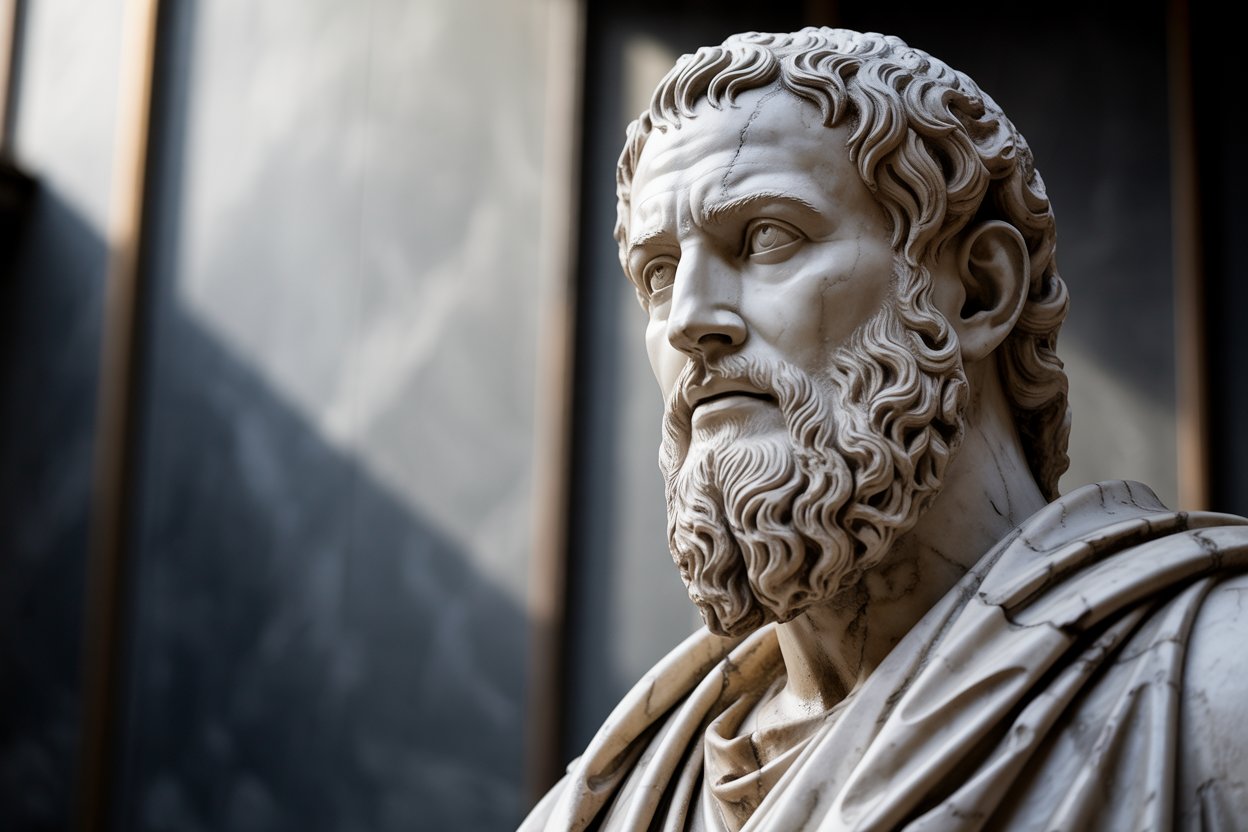
Don’t look for happiness: how to become antifragile thanks to stoicism
The incessant search for happiness has become one of the most accepted lies of modern life. Self-help gurus promise it, consumer culture sells it, and millions of people exhaust themselves chasing an emotional state that disappears as soon as circumstances change. The Stoics understood what we are only beginning to rediscover: happiness is not something we directly seek. It’s a byproduct of building something far more valuable: antifragility.
Antifragility goes beyond resilience. Where resilience means you can resist stress, antifragility means you improve through it. You don’t just survive challenges; you emerge stronger, clearer and more capable.
Stoicism offers a practical framework for building this quality, one that transforms the way you respond to adversity and ultimately produces the lasting contentment that the direct pursuit of happiness never provides.
1. Why chasing happiness makes you fragile
From a Stoic perspective, happiness is fundamentally unstable because it depends on external conditions. Your performance at work, the approval of others, your physical comfort, your relationship status and your financial success: these factors are constantly fluctuating. When your well-being is tied to variables you cannot control, you create structural fragility in your emotional life.
The pursuit itself makes the problem worse. When you pursue happiness, you become attached to specific outcomes. This attachment generates fear of loss, constant comparison with others, and chronic dissatisfaction with present circumstances. The more you grasp onto this feeling, the more anxiety you create. You end up producing the exact opposite of what you’re looking for.
There is a deeper problem that the Stoics identified centuries ago. A life optimized for feeling good generally involves systematically avoiding anything that is uncomfortable. Over time, this reduces your tolerance for stress, uncertainty, and failure. You become psychologically weaker, not stronger. Every setback seems catastrophic because you never developed the ability to handle difficulties. The more you protect your happiness, the more fragile you become.
2. The Stoic alternative to happiness
Stoicism is not about happiness. It aims for inner strength, clarity of judgment and personal free will. The philosophy prioritizes construction qualities that remain stable regardless of external circumstances. Happiness then naturally appears as a side effect of this force, but it is not the target.
This creates a fundamental shift in the way you approach life. Instead of asking “What will make me happy?” » you ask “What will make me stronger? What will develop my character? What can I control in this situation?” These questions point to actions that build resilience rather than seeking feelings that depend on circumstances, cooperating with your preferences.
The Stoic framework produces antifragility by changing your relationship with adversity. Challenges stop being obstacles to your happiness and become opportunities to strengthen precisely the qualities that produce lasting well-being. You no longer depend on life going smoothly. You can handle disruption, loss, and uncertainty because you have strengthened your abilities through deliberate practice.
3. How stoicism builds antifragility
The Stoic practice of focusing only on what you control eliminates a massive source of psychological fragility. You cannot control outcomes, the behavior of others, economic conditions, or countless other variables that affect your life.
You can control your thoughts, your judgments, your actions and your efforts. By directing your attention exclusively to your sphere of control, you remove the leverage of stress on your emotional state. The result is fewer mood swings and more consistency in how you present yourself, regardless of the circumstances.
The Stoics deliberately practiced voluntary discomfort as a form of training. It meant choosing simplicity over luxury, restraint over indulgence, and periodically exposing oneself to hardship. The practice serves several functions.
Physical discomfort becomes familiar rather than frightening. Comfort loses its addictive psychological power. Most importantly, your confidence increases because you develop direct evidence that you can endure difficulties. You are no longer theoretically capable of handling adversity – you actually have.
Negative visualization, one of the core Stoic practices, involves mentally rehearsing potential losses. You imagine losing your job, your health, your essential relationships or your material possessions. This is not pessimism or catastrophism. It is a psychological preparation that eliminates the element of shock when adversity arrives.
You’ve already dealt with the emotional impact in advance, so the event itself doesn’t have the same devastating effect on you. You respond with clarity instead of panicking. The Stoic emphasis on meaning rather than mood creates a stability that the pursuit of happiness cannot match.
When you prioritize virtue, duty, and purpose over personal satisfaction, your self-esteem becomes independent of external circumstances. You can have a terrible day and still maintain your dignity and commitment to your principles. You can face loss without losing yourself. This foundation produces the kind of inner strength that withstands any external storm.
4. The practical result of Stoic training
Here is the paradox that the Stoics understood: chasing happiness makes you fragile, but chasing strength makes you resilient. This resilience then produces lasting contentment that the direct search for happiness never provides. You become antifragile not by avoiding stress but by using it as training in psychological sustainability.
This does not mean that you become impassive or indifferent to results. This means that you develop the ability to maintain your composure and capacity for action, no matter what happens. You can care deeply about outcomes while recognizing that your well-being does not depend on achieving them. You can work intensely to achieve your goals while accepting that the outcome is ultimately out of your control.
The Stoic approach produces a specific type of freedom. You are no longer at the mercy of circumstances. You can face uncertainty without anxiety because you know you can handle anything that comes your way.
You can pursue ambitious goals without fear of failure because your self-esteem is not attached to the outcome. You can fully engage in life’s challenges because difficulties strengthen you instead of threatening you.
Conclusion
The culture around you will continue to sell happiness as the ultimate goal. This message is everywhere and it is fundamentally false. The happiness sought directly remains elusive and creates fragility. Strength deliberately sought produces resilience, and resilience produces lasting contentment.
The Stoic framework offers a clear alternative: control your reaction to circumstances, accept reality as it is, and use difficulties as a training ground for psychological resilience. This approach does not guarantee that you will feel happy every day. This guarantees something more valuable: the power to maintain composure, clarity, and action regardless of external conditions.
This foundation produces a form of calm and lasting well-being that the pursuit of happiness never provides. You become antifragile and happiness arrives on its own terms, without being pursued.
Berita Terkini
Berita Terbaru
Daftar Terbaru
News
Berita Terbaru
Flash News
RuangJP
Pemilu
Berita Terkini
Prediksi Bola
Technology
Otomotif
Berita Terbaru
Teknologi
Berita terkini
Berita Pemilu
Berita Teknologi
Hiburan
master Slote
Berita Terkini
Pendidikan
Resep
Jasa Backlink
Togel Deposit Pulsa
Daftar Judi Slot Online Terpercaya
Slot yang lagi gacor