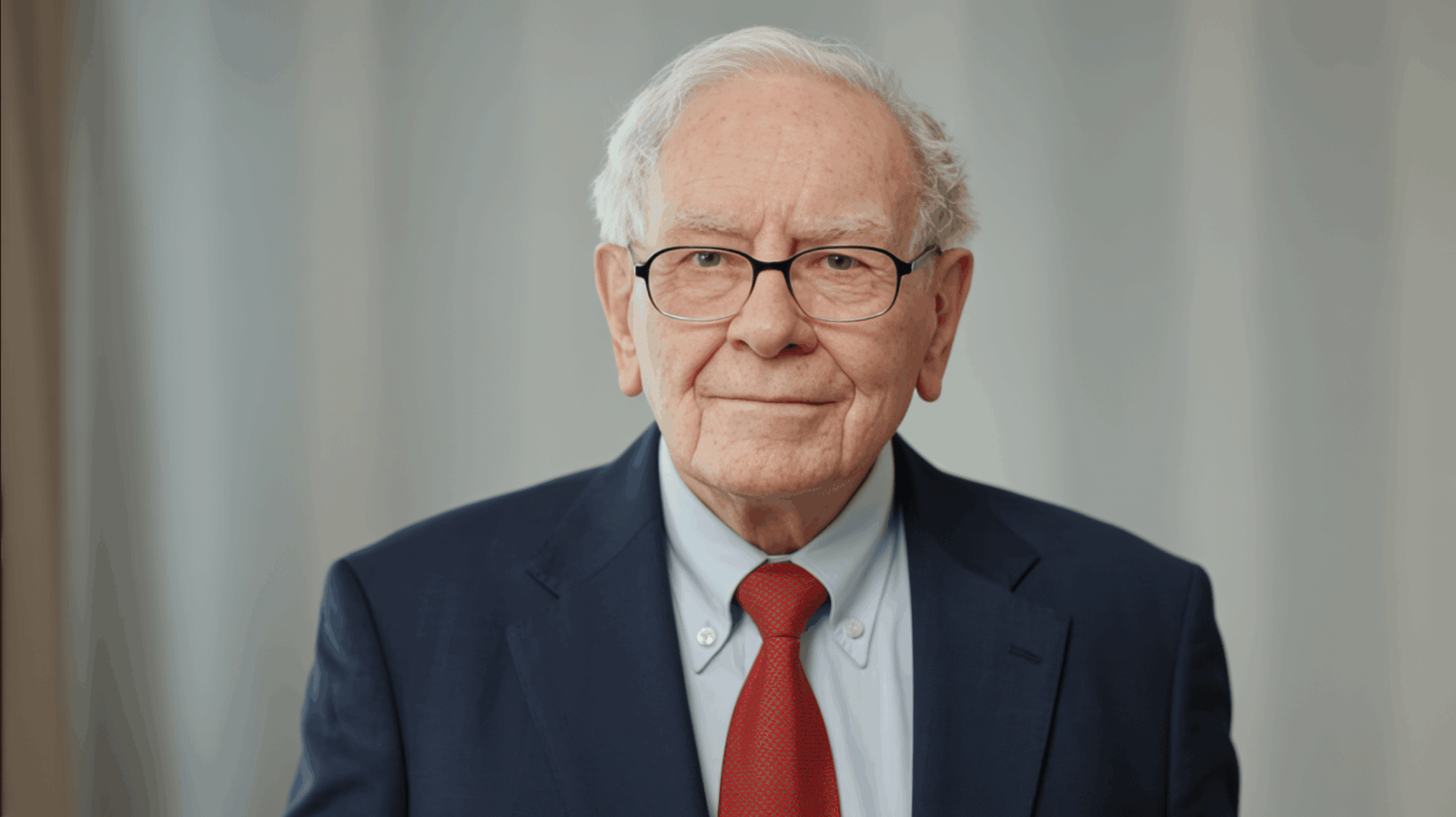
Warren Buffett’s 8 Biggest Mistakes (And What They Teach About Investing)
Warren Buffett is widely considered the greatest investor of all time, but his journey is not without its flaws. What sets him apart from most investors isn’t perfection, it’s his willingness to study his own failures and share his lessons publicly.
Over the decades, in letters and interviews with Berkshire Hathaway shareholders, Buffett has been particularly candid about what went wrong. These mistakes reveal patterns that any investor can learn from and avoid.
1. Buy fair companies rather than big ones
Early in his career, Buffett was heavily influenced by Benjamin Graham’s approach of finding statistically cheap companies, regardless of their quality. He admits that this framework led him to spend years buying mediocre companies simply because they looked cheap on paper.
Berkshire Hathaway itself is the perfect example. He bought it as a cheap textile company, only to watch it struggle for years as its underlying business deteriorated. As Buffett later noted, “Time is the friend of good things, the enemy of mediocre ones. » The lesson that stuck: A good company at a fair price almost always beats a fair company at a great price.
2. Holding on to losing investments for too long
Buffett has openly admitted that one of his costliest habits was refusing to sell investments once it became clear that the original thesis was no longer valid. He held on out of hope, familiarity, or reluctance to admit his mistakes – and in most cases, time made things worse instead of better.
Dexter Shoe Company is the most painful example. Buffett not only bought a company that ultimately went to zero, but he also paid for it with shares of Berkshire that later became extremely valuable. The lesson is clear: once an error is obvious, the cost of delay quickly mounts.
3. Large compounds are missing
Buffett said some of his biggest regrets weren’t about bad investments, but about stocks he never bought or bought too late. He had the opportunity to study Amazon and Google while they were still in relatively early stages of growth, but he passed on both at that time and didn’t buy them until much later in their growth cycle.
1. Google (Alphabet)
Buffett expressed his regrets regarding Google. He admits he had a front-row seat to their success, but didn’t take action.
-
The “Front Row” seat: Geico (owned by Berkshire Hathaway) was one of the first major customers of Google’s advertising platform. Buffett saw how effective the ads were and how much Geico was paying for them.
-
The regret: In 2017, he told shareholders: “I ruined everything.” He realized too late that Google had a “natural monopoly” on search advertising, with virtually no additional cost to scale.
-
“I don’t mind catching Amazon early. This guy (Jeff Bezos) is a miracle worker; he’s very special. I’m giving myself a pass on that, but I feel like an ass for not identifying Google better. I think Warren feels the same way. We made a mistake.” “Google has a huge new moat. In fact, I’ve probably never seen a moat that wide… Their moats are full of sharks.” -Charlie Munger
-
Berkshire Hathaway now has a position in Alphabet (Google’s parent company).
2. Amazon
Buffett’s relationship with Amazon followed a similar path of public praise mixed with self-criticism.
-
Monitoring: Munger called Jeff Bezos a “miracle worker” and admitted that he underestimated Bezos’ ability to dominate retail and the cloud (AWS) simultaneously.
-
Late entry: Berkshire finally bought Amazon stock in 2019. At that time, Amazon was already a billion-dollar company.
-
The twist: Buffett stressed that the decision to buy Amazon was not actually his own: it was made by one of his two investment managers, Todd Combs or Ted Weschler. Buffett gave his blessing, admitting he should have been “smart enough” to do it years ago.
He acknowledged that failing to act on obvious, sustainable businesses with enormous competitive advantages would likely cost Berkshire more than any investment it actually made. Missing a true compounding machine for years or decades is a far more costly mistake than most investors realize at the time.
4. Step outside the circle of skills
One of Buffett’s most consistent principles is to stay within what he calls his “circle of competence.” When he moves away from it, he suffers the consequences. He was blunt about the fact that overconfidence in one’s own understanding of a business is a recurring source of error.
Its investment in Tesco, the British grocery chain, is a documented example. He misjudged the competitive dynamics and accounting issues involved and ultimately sold his business at a significant loss. “The risk comes from not knowing what we are doing” he said – a line that reads as a personal warning as much as general advice.
5. Paying too much even for quality
Buffett has made it clear that buying a wonderful company does not automatically guarantee investment success. If the price paid is too high, even a large company can produce poor returns for years. Valuation discipline is important regardless of the quality of the business.
This is perhaps his most nuanced lesson, as it flies in the face of a popular simplification of his philosophy. The full picture is captured in one of his most-quoted lines: “Price is what you pay. Value is what you get.” These two things rarely have the same number, and the gap between them determines the outcome.
6. Underestimating management red flags
Buffett has written and spoken at length about the importance of managerial character. He also admitted that he had not always applied this standard rigorously enough when evaluating companies. On several occasions, he trusted managers who later proved to be disappointing managers of capital.
He views integrity as non-negotiable in the people he associates with and said he tries to value it above anything else. His regrets in this area have reinforced a constant rule: no financial indicator can compensate for poor morality at the head of a company.
7. Letting inertia delay necessary action
Sometimes Buffett’s mistakes weren’t about making a bad decision, but about making a good decision too slowly. He reflected on situations in which he clearly recognized a problem but let comfort, loyalty, or institutional inertia delay action on what he already knew.
This trend applies to both selling underperforming investments and reallocating capital to better opportunities. Emotional attachment to a previous decision or to the people involved can override rational judgment. Buffett’s self-diagnosis in these cases was flawless: the error was not ignorance, but hesitation.
8. Not betting big enough on high-conviction ideas
Buffett also recognized the other side of the size problem. When the odds are truly and overwhelmingly in your favor, a small position is in itself a mistake. He described situations in which he identified a great opportunity early on but deployed far less capital than the conviction warranted.
Position sizing is not just a risk management tool: it is a return driver. When you have a real advantage and a long runway, failing to act aggressively is a form of underperformance. Buffett is known for focusing hard when confidence is warranted, and he considers excessive caution in high-conviction situations a costly habit to break.
Conclusion
What makes Buffett’s list of mistakes remarkable is not the mistakes themselves, but the clarity with which he expresses what he learned from each one. Most investors prefer to overcome their mistakes in silence. He made it a curriculum.
The patterns have been consistent over the decades: prioritize business quality, act quickly on broken theses, don’t miss the most obvious, stay within your skill set, pay the right price, demand management integrity, override inertia, and size positions based on conviction.
His long-term advantage has never been to be right every time. It was about systematically learning from failure and refusing to repeat the same mistakes on a large scale. This discipline, more than any investment, is the foundation of everything Berkshire has become.
PakarPBN
A Private Blog Network (PBN) is a collection of websites that are controlled by a single individual or organization and used primarily to build backlinks to a “money site” in order to influence its ranking in search engines such as Google. The core idea behind a PBN is based on the importance of backlinks in Google’s ranking algorithm. Since Google views backlinks as signals of authority and trust, some website owners attempt to artificially create these signals through a controlled network of sites.
In a typical PBN setup, the owner acquires expired or aged domains that already have existing authority, backlinks, and history. These domains are rebuilt with new content and hosted separately, often using different IP addresses, hosting providers, themes, and ownership details to make them appear unrelated. Within the content published on these sites, links are strategically placed that point to the main website the owner wants to rank higher. By doing this, the owner attempts to pass link equity (also known as “link juice”) from the PBN sites to the target website.
The purpose of a PBN is to give the impression that the target website is naturally earning links from multiple independent sources. If done effectively, this can temporarily improve keyword rankings, increase organic visibility, and drive more traffic from search results.