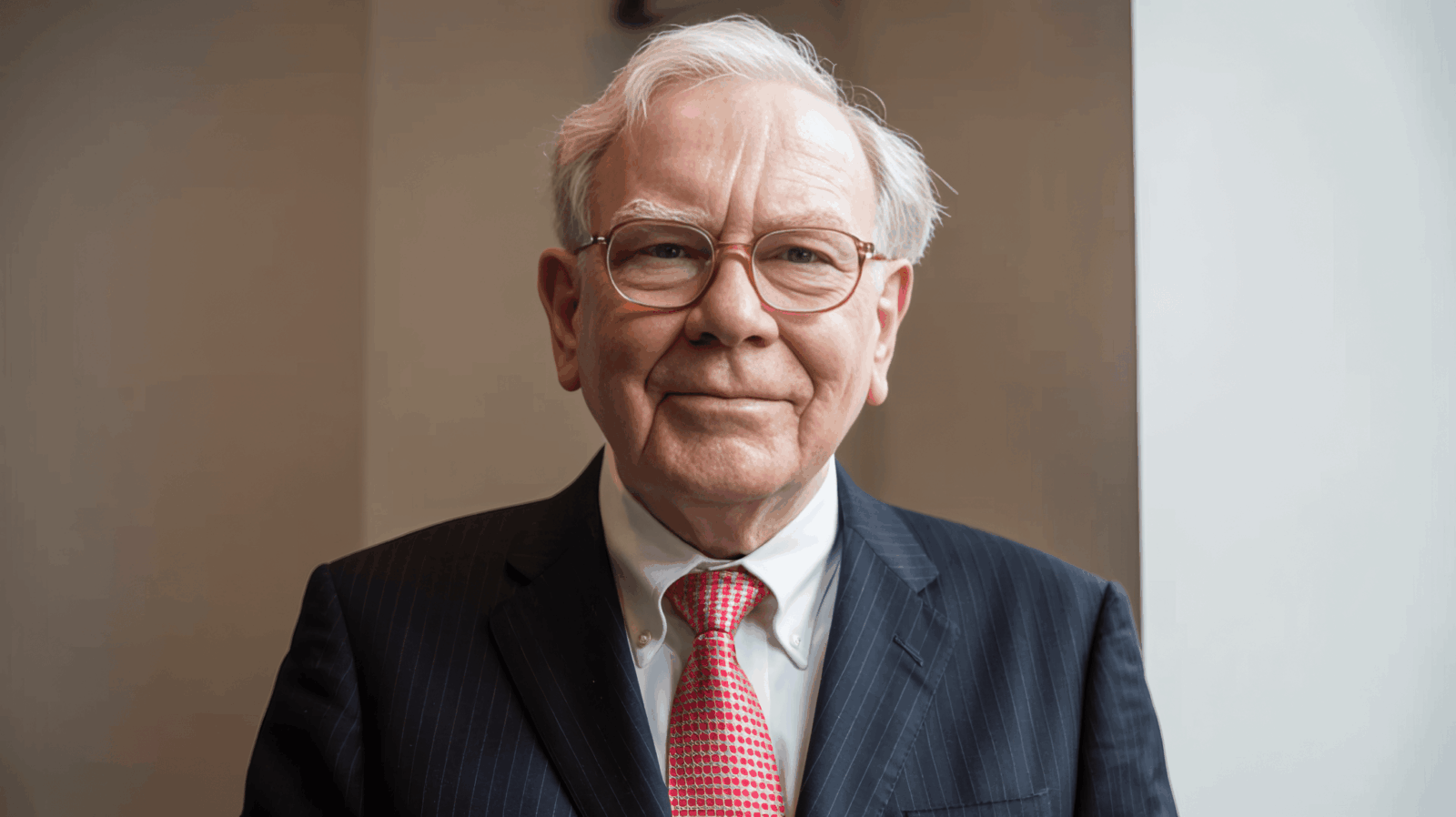
Warren Buffett: the “toll bridge” strategy that quietly creates wealth over time
Warren Buffett spent decades researching a specific type of business. Not the flashiest, not the fastest growing, not the most headline-grabbing. It looks for companies that are at the center of economic activity and collect a small fee each time the world passes through them.
He calls this the “toll bridge” strategy, and it is one of the most powerful wealth-creation frameworks in the history of investing. Understanding it completely changes the way you view markets.
1. What Buffett means by “toll bridge.”
The concept comes directly from Buffett himself. “In an inflationary world, a toll bridge would be a good thing to own because you’ve planned for the capital costs. You built it with old dollars and you don’t need to keep replacing it,” he said.
The metaphor is precise. Building a true toll bridge requires a significant initial investment, but once built, it brings in money every day with minimal ongoing cost. The bridge doesn’t care whether the economy is booming or struggling. Traffic continues to flow and tolls are still collected.
2. The three structural advantages
What sets a toll bridge company apart from a regular business is the combination of three specific qualities working together. The first is controlling a critical choke point. The second is pricing power. The third is low capital requirements to maintain profits.
When all three exist in one company, the composition becomes almost fluid. Most companies only have one of these qualities. Toll bridge companies have all three, and this combination is extremely rare.
3. Control the choke point
A true toll bridge doesn’t just compete; it wins. This forces participation. Customers don’t choose it because it’s their preferred option. They use it because there is no other way to go.
This is a fundamentally different position than having a loyal customer base. Payment networks like Visa and Mastercard sit between almost all retail transactions and the banking system. Stock exchanges serve as intermediaries between buyers and sellers of financial assets. These companies control a node that commerce cannot bypass.
4. Pricing power as a composition driver
Buffett’s reference to inflation is not accidental. Most businesses are crushed by inflation because their costs are rising faster than they can raise their prices. A toll bridge completely reverses this dynamic.
Since the fees collected are small compared to the total transaction value, customers barely notice a slight increase. A small percentage increase over millions or billions of transactions generates huge additional revenue. The customer does not resist because the inconvenience of resistance outweighs the cost of payment.
5. Low capital intensity: where the real wealth hides
It’s quality that separates good companies from exceptional companies, and Buffett has always understood this well. “It’s much better to buy a great company at a fair price than a fair company at a great price.” he said. The “wonderful company” he refers to is almost always one that doesn’t need to consume its own profits simply to stay competitive.
Most companies make money and then reinvest most of it into maintaining their operations, updating their equipment, or defending their market share. A toll bridge company makes money and keeps most of it as free cash flow. This money can then be reinvested, returned to shareholders or used to acquire new assets. It is this cycle, repeated for decades, that creates great wealth.
6. Why inflation makes this strategy even more valuable
Buffett’s idea of building the “old dollar” bridge reflects a sophisticated understanding of how time and inflation interact. A business that has required significant capital investment in the past benefits because those assets become more valuable in real terms over time.
A competitor who wanted to reproduce the toll bridge today would have to build it with today’s dollars, which are worth less. The original owner collects the tolls while the cost of replacing the property continues to rise. This creates a natural barrier to competition that strengthens as inflation passes.
7. What Buffett avoids: the opposite of a toll bridge
Understanding what Buffett is looking for also means understanding what he rejects. It systematically avoids businesses that are capital intensive, highly competitive, or subject to rapid technological change. These companies make profits with one hand and return them with the other.
A company that must constantly modernize its factories, lower its prices to remain competitive or reinvent its product to avoid obsolescence cannot create lasting wealth. Profits are recycled to ensure survival rather than turning into growth. Buffett described this as a trap that most businesses get caught in.
8. Identify modern toll bridges
The physical toll bridge is just a metaphor. Real-world examples in today’s economy take many forms. Financial infrastructure, including payment networks and clearing systems, collects a small fee from the enormous flow of global trade.
Enterprise software platforms integrated into a company’s daily operations act as digital toll bridges. Switching costs are high and the software charges its fees whether business is good or bad. The data and index providers that companies rely on for benchmarking and pricing serve the same function. The commonality is that they are all at a point where economic activity must pass through.
Conclusion
The toll bridge strategy is not exciting. It does not promise quick wins, nor does it generate dramatic stories of disruption or transformation. What it offers is something more valuable in the long run: consistency, pricing power, and decades of compounding cash flow.
Buffett has spent his entire career trying to own the part of the system that everyone should use, regardless of what the future holds. This discipline, applied patiently over time, is the silent engine behind one of the greatest wealth creation records in history. The toll bridge continues to collect, year after year, whether the world notices it or not.
PakarPBN
A Private Blog Network (PBN) is a collection of websites that are controlled by a single individual or organization and used primarily to build backlinks to a “money site” in order to influence its ranking in search engines such as Google. The core idea behind a PBN is based on the importance of backlinks in Google’s ranking algorithm. Since Google views backlinks as signals of authority and trust, some website owners attempt to artificially create these signals through a controlled network of sites.
In a typical PBN setup, the owner acquires expired or aged domains that already have existing authority, backlinks, and history. These domains are rebuilt with new content and hosted separately, often using different IP addresses, hosting providers, themes, and ownership details to make them appear unrelated. Within the content published on these sites, links are strategically placed that point to the main website the owner wants to rank higher. By doing this, the owner attempts to pass link equity (also known as “link juice”) from the PBN sites to the target website.
The purpose of a PBN is to give the impression that the target website is naturally earning links from multiple independent sources. If done effectively, this can temporarily improve keyword rankings, increase organic visibility, and drive more traffic from search results.