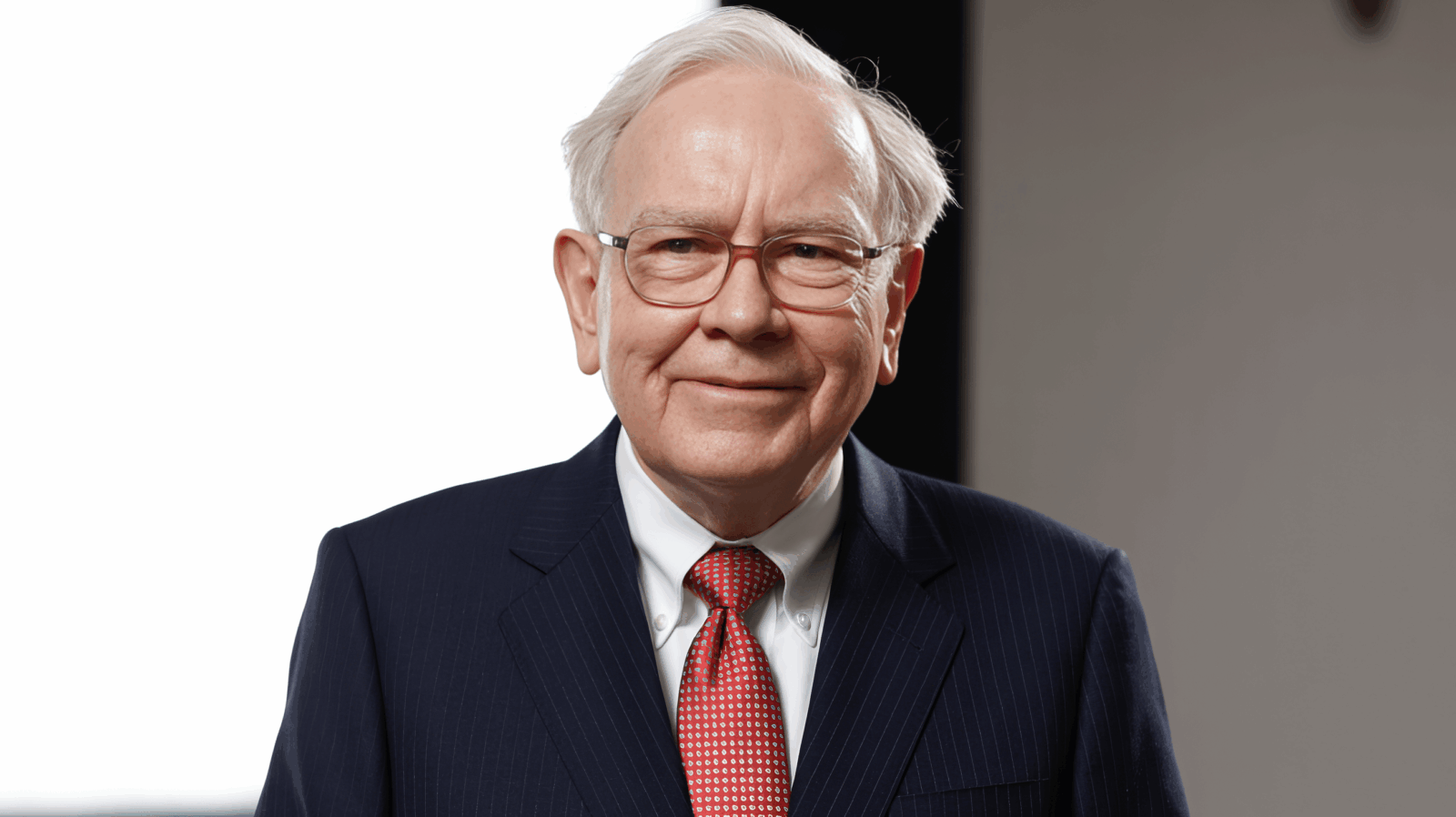
Warren Buffett says it’s the most important investment you can make
Warren Buffett, the “Oracle of Omaha,” has spent decades mastering the art of capital allocation. He built one of the greatest fortunes in history with Berkshire Hathaway, racking up returns through bull markets, bear markets, recessions and booms.
Yet the most important investment Buffett recommends has nothing to do with stocks, real estate, or bonds. According to Buffett: “The most important investment you can make is in yourself.”
1. Why Self-Investing Outperforms All Other Assets
Buffett’s investment philosophy is based on identifying assets with lasting, compound value. When he turns his gaze to human capital, the logic is hard to dispute.
“The best investment, by far, is anything that grows yourself, and it’s not taxed at all. They can’t inflate it. They can’t take it away from you.” —Warren Buffett.
Buffett said: “The more you learn, the more you earn.”
This is not a motivational filler. It reflects the same analytical framework that he applies to every company he evaluates. A person who continually hones their abilities builds a “moat” around their earning power, just as a large company builds a moat around its competitive position.
Unlike stocks, there are no brokers, no transaction fees, and no quarterly earnings reports to worry about. Returns accumulate slowly and steadily over a lifetime.
2. The one asset that no one can take from you
One of Buffett’s most consistent points about self-investing is its permanence. Financial assets can disappear overnight. A skill set acquired over years cannot.
He declared, “No one can take away what you have inside you.” This observation carries considerable weight from a man who has seen businesses collapse, currencies devalue and fortunes evaporate over decades of investing.
What you develop in your mind travels with you through all economic environments. A skilled communicator, sharp analytical thinker, or disciplined decision maker maintains this advantage no matter what the Federal Reserve or the economy as a whole decides.
This makes human capital particularly resilient. It is the only asset on your personal balance sheet that increases in value precisely when external conditions become more difficult.
3. Communication skills as a career multiplier
Of all the areas Buffett recommends investing in yourself, communication skills take the top spot. He repeatedly told students that improving their ability to communicate, both in writing and in person, could significantly increase their professional value.
The certificate hanging in Buffett’s office is not his degree in economics from the University of Nebraska or his graduate degree from Columbia University. This is his public speaking certificate from Dale Carnegie. This detail alone tells you something important about what he values.
The reasoning is simple. You can develop the sharpest analysis, the most original idea, or the smartest strategy in the room, but if you can’t communicate it clearly, it goes nowhere. The ability to persuade, explain, and connect with other people is a force multiplier over every other skill you possess.
Buffett said: “If you can’t communicate, it’s like winking at a girl in the dark. Nothing happens.” Investing time and effort into becoming a better communicator is one of the most cost-effective steps a professional can take early in their career.
4. The cumulative power of reading and lifelong learning
Buffett is famous for spending the majority of his workday reading. He described his approach to the accumulation of knowledge in terms that reflect his approach to the accumulation of wealth: slow, steady and relentless.
He said, “That’s how knowledge works. It accumulates, like compound interest. You all can do it, but I guarantee few of you will.” The discipline required to consistently invest in learning over decades is rare, and that scarcity is precisely what creates advantage.
Extensive reading of industries, history, psychology, and business creates a mental library of patterns and principles. When a new situation arises, someone who has accumulated this type of knowledge base automatically draws on it, making better decisions more quickly than someone who hasn’t done the work.
Investing is not a one-time event. It’s a daily habit that, over the years, breeds a level of judgment that no market downturn can erase.
5. Take care of your mind and body
Buffett extends the concept of personal investment to physical and mental health through one of his most memorable analogies. Buffett said:
“Imagine I’m going to give you the car of your dreams. You can choose any car you want. But there’s a catch: it’s the only car you’ll ever have in your life.”
Now how are you going to treat this car? You will read the manual five times. You’re going to keep it in a garage, protect it, change the oil twice as often as necessary. If there is a small scratch, you will repair it immediately so that it does not rust. Because you know it must last as long as you live.
This is exactly the position you are in regarding your mind and body. You only have one mind and one body, and that must last a lifetime. Now it’s very easy to let them go potty. But if you don’t take care of that mind and body, it will be ruined in forty years, just like the car would be.
Buffett then delivers the message directly: “You only have one mind and one body. You can’t start taking care of it at 50. By then you will have rusted if you didn’t do it before.”
The implication is clear. Your body and mind are the vehicle through which every dollar you earn will be generated. Neglecting them in the short term imposes increasing costs in the long term, much like ignoring small maintenance issues until they become catastrophic engine failures.
Conclusion
Warren Buffett built his fortune by identifying assets with enduring value, sustainable competitive advantages and long runways for capitalization. His verdict on the best investment a person can make reflects exactly this framework applied to human potential.
Developing communication skills, gaining knowledge through consistent reading, and maintaining physical and mental health to perform at a high level are not easy suggestions. These are the fundamental investments that determine the ceiling of each financial return you will generate.
The stock market will fluctuate. Inflation will erode purchasing power. Business cycles come and go. But the person who seriously invests in his or her own capabilities builds an asset base that none of these forces can touch.
As Buffett has made clear throughout his career, the best place to start is not with a brokerage account. It’s with an honest look at where investing in yourself would produce the greatest return right now.
PakarPBN
A Private Blog Network (PBN) is a collection of websites that are controlled by a single individual or organization and used primarily to build backlinks to a “money site” in order to influence its ranking in search engines such as Google. The core idea behind a PBN is based on the importance of backlinks in Google’s ranking algorithm. Since Google views backlinks as signals of authority and trust, some website owners attempt to artificially create these signals through a controlled network of sites.
In a typical PBN setup, the owner acquires expired or aged domains that already have existing authority, backlinks, and history. These domains are rebuilt with new content and hosted separately, often using different IP addresses, hosting providers, themes, and ownership details to make them appear unrelated. Within the content published on these sites, links are strategically placed that point to the main website the owner wants to rank higher. By doing this, the owner attempts to pass link equity (also known as “link juice”) from the PBN sites to the target website.
The purpose of a PBN is to give the impression that the target website is naturally earning links from multiple independent sources. If done effectively, this can temporarily improve keyword rankings, increase organic visibility, and drive more traffic from search results.