Butternut Squash Lasagna
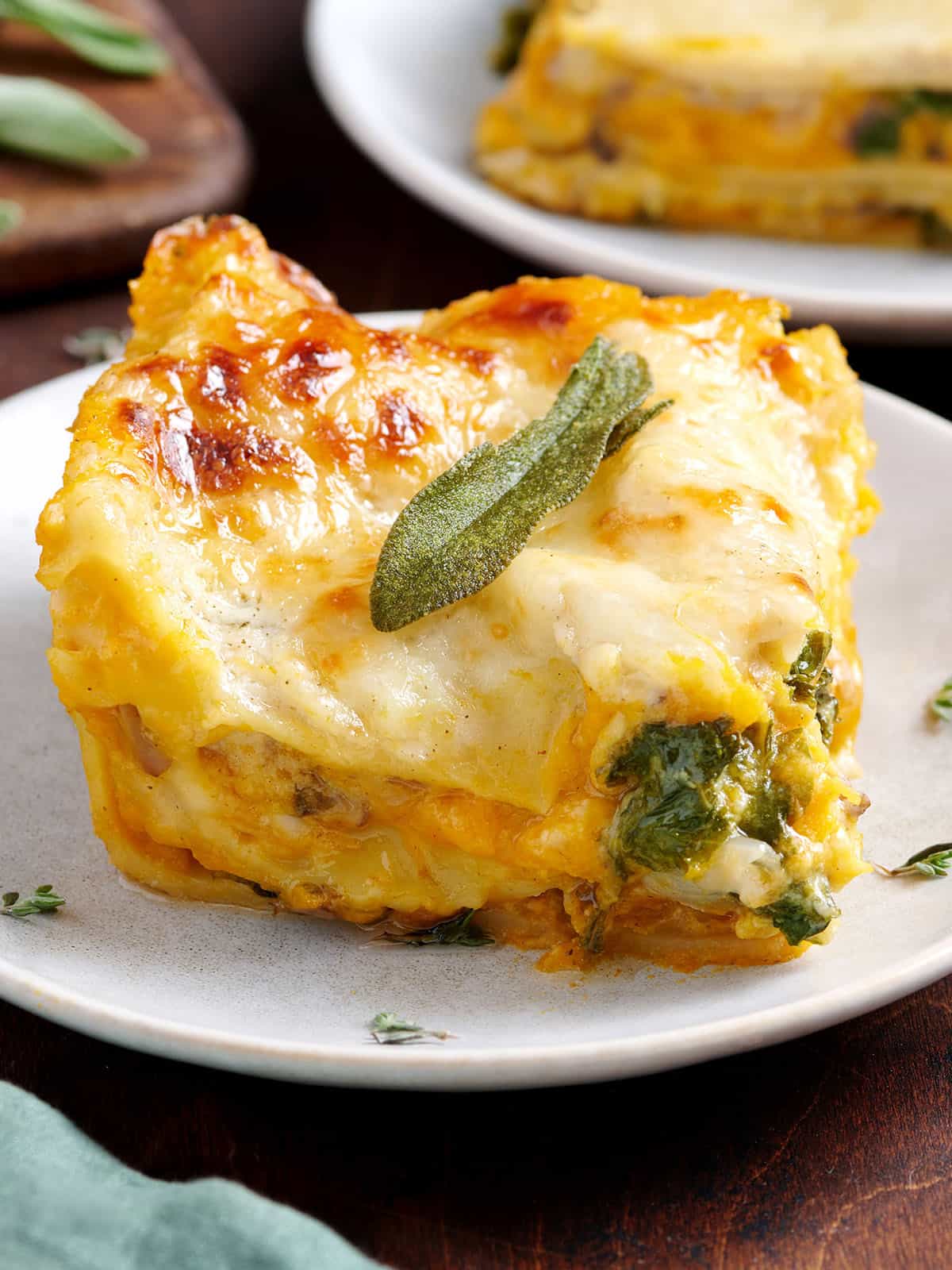
Some recipes are worth slowing down for, and this Butternut Squash Lasagna is one of them. Tender noodles, melty cheese, earthy kale and mushrooms, and squash puree come together with a from-scratch brown butter béchamel sauce infused with sage. It’s nutty, aromatic, and definitely the real star (but I promise it’s easy to make!) This recipe takes a little patience, but the finished dish is cozy and rich without feeling too heavy. I make it with super simple, budget-friendly ingredients, and one pan makes enough to feed 9 for only $1.88 per serving. And because it tastes even better the next day, this recipe works really well for meal prep!
A Vegetarian Lasagna Made with Budget Basics
Roasted butternut squash is one of my favorite fall sides, so turning it into a hearty vegetarian spin on classic lasagna felt like an obvious next move. Preparing a whole squash may sound like the hard part, but this method makes it almost ridiculously easy. I don’t peel it or wrestle with it trying to cut it into cubes. Instead, I slice it in half, scoop out the seeds, and roast it until the flesh is soft enough to lift straight from the skin. Then I blend it with cottage cheese and vegetable broth to create a velvety sauce, ready to layer with the mushroom-kale filling, mozzarella, and sage brown butter béchamel sauce.
And don’t let the words brown butter béchamel scare you off. It’s made with budget basics like butter, flour, and milk, with fresh sage added as the butter browns. That little extra step gives the sauce a rich, toasted flavor that balances the sweet squash and earthy vegetables. Even better, the sage leaves turn crisp in the butter, so I save them to garnish the finished lasagna. Nothing wasted and inexpensive ingredients creating this much flavor is a budget win if I’ve ever seen one!
Recipe Success Tips
- Use a sharp knife to make cutting the squash easier! Butternut squash is dense, so a large, sharp chef’s knife makes halving it much easier than trying to force a dull blade through it. I set the squash on a stable cutting board and work slowly. If the knife starts to stick, pull it back out and reposition it rather than pushing harder.
- Roast the squash cut-side down. I roast the squash flesh-side down so it has direct contact with the hot pan, which encourages a little browning and helps the squash soften as steam builds underneath. It’s ready when a knife slides easily into the thickest part.
- Cook the moisture out of the vegetables. One thing I always watch with veggie lasagnas like this is excess water from the vegetables (our zucchini lasagna is another example of a veggie packed lasagna!). Let the mushrooms release their liquid, then keep cooking until it evaporates and they start to brown. Once the kale goes in, cook it until wilted and reduced in volume. Too much moisture here can make the finished butternut squash lasagna loose or watery.
- Keep a close eye on the brown butter. Butter can go from perfectly toasted to burnt surprisingly fast! Cook it over moderate heat and watch the milk solids at the bottom of the pan. Once they turn golden brown and the butter smells nutty, move on to the next step right away. A light-colored pan makes the color much easier to judge.
- Cover those noodles completely. Make sure the sauces reach all the way to the corners and edges of every lasagna sheet before baking. Any exposed noodles may not cook through properly and will stay firm.
- Give it at least 10 minutes to rest. I always give this butternut squash lasagna at least 10 minutes to rest after it comes out of the oven. The sauces and cheese will settle and thicken slightly as it sits, helping the layers hold together better when sliced.

Print
Add to Collection Go to Collections
Butternut Squash Lasagna
#wprm-recipe-user-rating-0 .wprm-rating-star.wprm-rating-star-full svg * { fill: #343434; }#wprm-recipe-user-rating-0 .wprm-rating-star.wprm-rating-star-33 svg * { fill: url(#wprm-recipe-user-rating-0-33); }#wprm-recipe-user-rating-0 .wprm-rating-star.wprm-rating-star-50 svg * { fill: url(#wprm-recipe-user-rating-0-50); }#wprm-recipe-user-rating-0 .wprm-rating-star.wprm-rating-star-66 svg * { fill: url(#wprm-recipe-user-rating-0-66); }linearGradient#wprm-recipe-user-rating-0-33 stop { stop-color: #343434; }linearGradient#wprm-recipe-user-rating-0-50 stop { stop-color: #343434; }linearGradient#wprm-recipe-user-rating-0-66 stop { stop-color: #343434; }
Equipment
-
9×13 Baking Dish
-
Sheet Pan
-
Large 12″ skillet
-
Food Processor or Blender
-
Small Saucepan
Ingredients
- 1 medium butternut squash halved and seeded, (about 2½-3 pounds) $3.85
- 2 tsp poultry seasoning divided, (4g) $0.18*
- 2 Tbsp cooking oil divided, (1 oz.) $0.07
- 1 tsp salt divided, (3g) $0.02
- ½ tsp black pepper divided, (0.6g) $0.06
- 1 cup cottage cheese 225g, $0.95
- ½ cup vegetable broth 4 oz., $0.08**
- 1 cup onion finely diced, (150g) $0.70
- 3 garlic cloves minced, (1 Tbsp) $0.22
- 8 oz. white mushrooms finely chopped, (227g) $1.78
- 4 cups kale chopped, (268g) $0.95***
- 4 Tbsp butter 56g, $0.46
- 10 fresh sage leaves $0.89
- ¼ cup all-purpose flour 31g, $0.04
- 3 cups whole milk 24 oz., $0.74
- ½ cup Parmesan cheese grated, (50g) $1.16
- 10 oven-ready lasagna noodles I use 9-10 sheets, $1.02****
- 4 cups mozzarella cheese shredded, (1 lb, 450g) $3.78
Instructions
-
Gather and prep all ingredients and preheat your oven to 400°F (200°C).
-
Cut your butternut squash in half lengthwise and brush cut sides with olive oil, sprinkle with ½ tsp salt, ¼ tsp pepper, and 1 tsp poultry seasoning. Place cut-side down on a parchment-lined baking sheet and roast for 40-50 minutes, until tender.
-
While the squash is roasting, in a large skillet, oil over medium heat. Sauté onion, garlic and mushrooms until softened, and mushrooms have released their liquid and browned about 8-10 minutes.
-
Add kale and cook until wilted and tender. Season with ½ tsp salt and ¼ tsp black pepper. Set aside.
-
Scoop squash into a blender or food processor. Add cottage cheese and vegetable broth. Blend until smooth.
-
Melt the butter in a small saucepan over medium heat. Add the sage leaves and swirl the pan as the butter foams and turns golden brown. Watch closely-the aroma should be nutty and toasty. Remove from heat, let cool for a few minutes, then transfer the crispy sage to a paper towel and set aside.
-
Return the browned butter to medium heat and whisk in the flour, cooking for about a minute to get rid of any raw flavor. Slowly pour in the milk while whisking constantly, then bring the mixture to a gentle simmer. Keep whisking until it thickens, about 5-6 minutes (see notes).
-
Stir in Parmesan and 1 tsp poultry seasoning into the bechamel. Taste and season with salt and pepper. Keep warm.
-
Assemble the butternut squash lasagna: Lightly grease a 9×13 baking dish and spread a thin layer of béchamel on the bottom to prevent sticking. Layer lasagna noodles over the béchamel. Spread a generous layer of squash purée on top. Then add a layer of mushroom-kale mixture, then drizzle with béchamel and sprinkle mozzarella.
-
Then repeat layering: noodles, squash purée, vegetable mixture, béchamel, mozzarella.
-
Finish with a final layer of noodles, béchamel, and mozzarella.
-
Cover with foil and bake at 375°F for 30 minutes. Remove foil and bake for another 10-15 minutes until the top is golden and bubbly. Let rest at least 10 minutes before slicing.
-
Slice the lasagna and serve, topping each portion with the crispy sage leaves.
See how we calculate recipe costs here.
Notes
**I like Better Than Bouillon to make my broths, but you can substitute any vegetable broth.
***Frozen kale also works well here. Use 2 cups frozen kale, thaw it completely, then squeeze out as much excess moisture as possible before adding it to the filling.
****I use oven-ready lasagna noodles, so there’s no need to boil or par-cook them before layering. If you only have regular lasagna noodles, cook them in boiling water according to the package directions before assembling this lasagna.
Prep ahead: For easier prep, you can make the squash purée a day ahead and store it in the fridge. You can also fully assemble the lasagna ahead and refrigerate it overnight before baking. Add a few minutes to the bake time to ensure it heats through fully.
Total yield may vary depending on your baking dish. A 9×13 dish usually gives 9 slices, but with straight sides you could get about 12 slices. You may need extra lasagna noodles.
Nutrition
how to make Butternut Squash Lasagna step-by-step photos
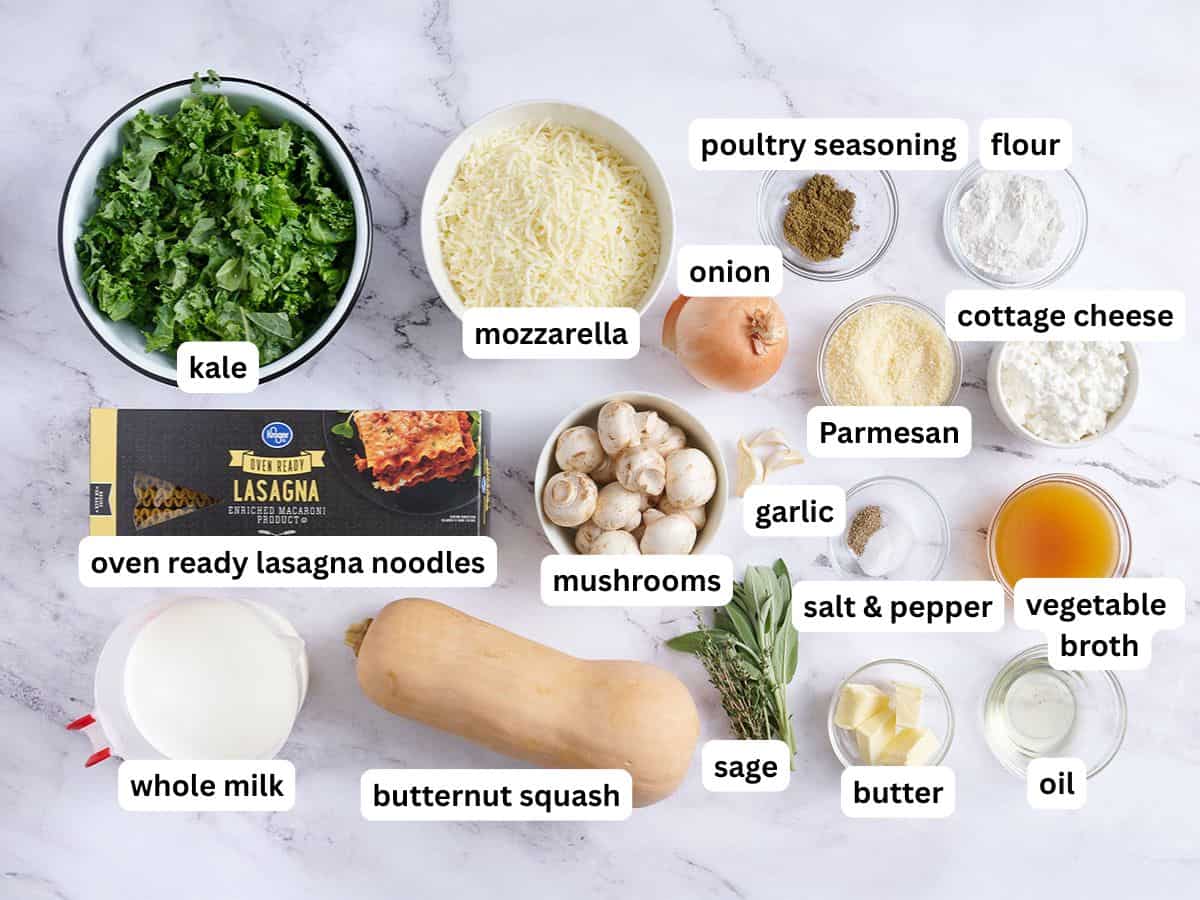
Gather all of your ingredients and preheat the oven to 400°F (200°C).

Roast the squash: Cut 1 medium butternut squash (2½-3 lbs.) in half lengthwise and scoop out the seeds. Brush the cut sides with 1 Tbsp cooking oil, then season with ½ tsp salt, ¼ tsp black pepper, and 1 tsp poultry seasoning. Place the squash cut-side down on the prepared baking sheet and roast for 40-50 minutes, or until a knife slides easily into the thickest part with little resistance. Set aside until cool enough to handle.
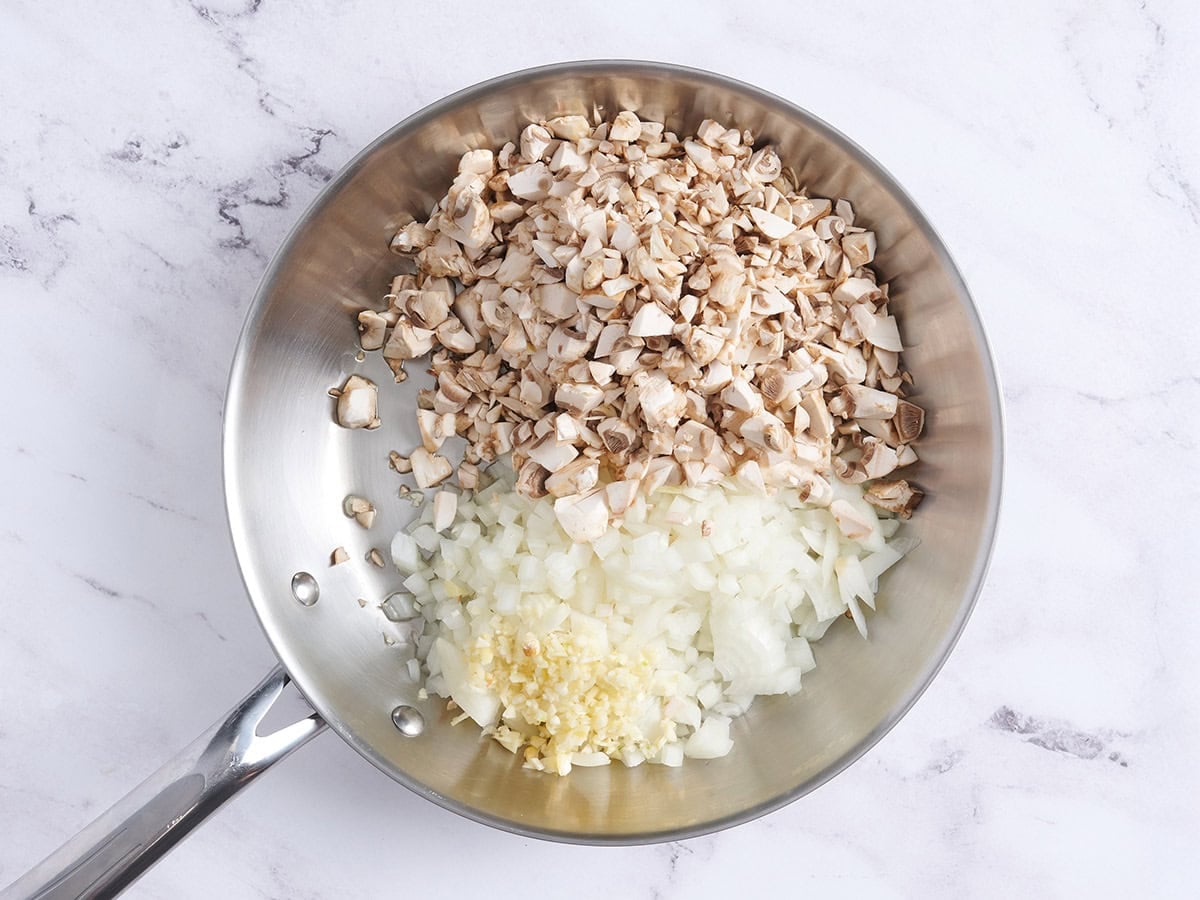
Cook the mushroom and kale filling: While the squash roasts, heat the remaining 1 Tbsp cooking oil in a large skillet over medium heat. Add 1 cup finely diced onion, 3 minced garlic cloves, and 8 oz. finely chopped white mushrooms. Cook for 8-10 minutes, stirring occasionally, until the onion is soft and the mushrooms have released their liquid. Keep cooking until that moisture has evaporated and the mushrooms begin to slightly brown.
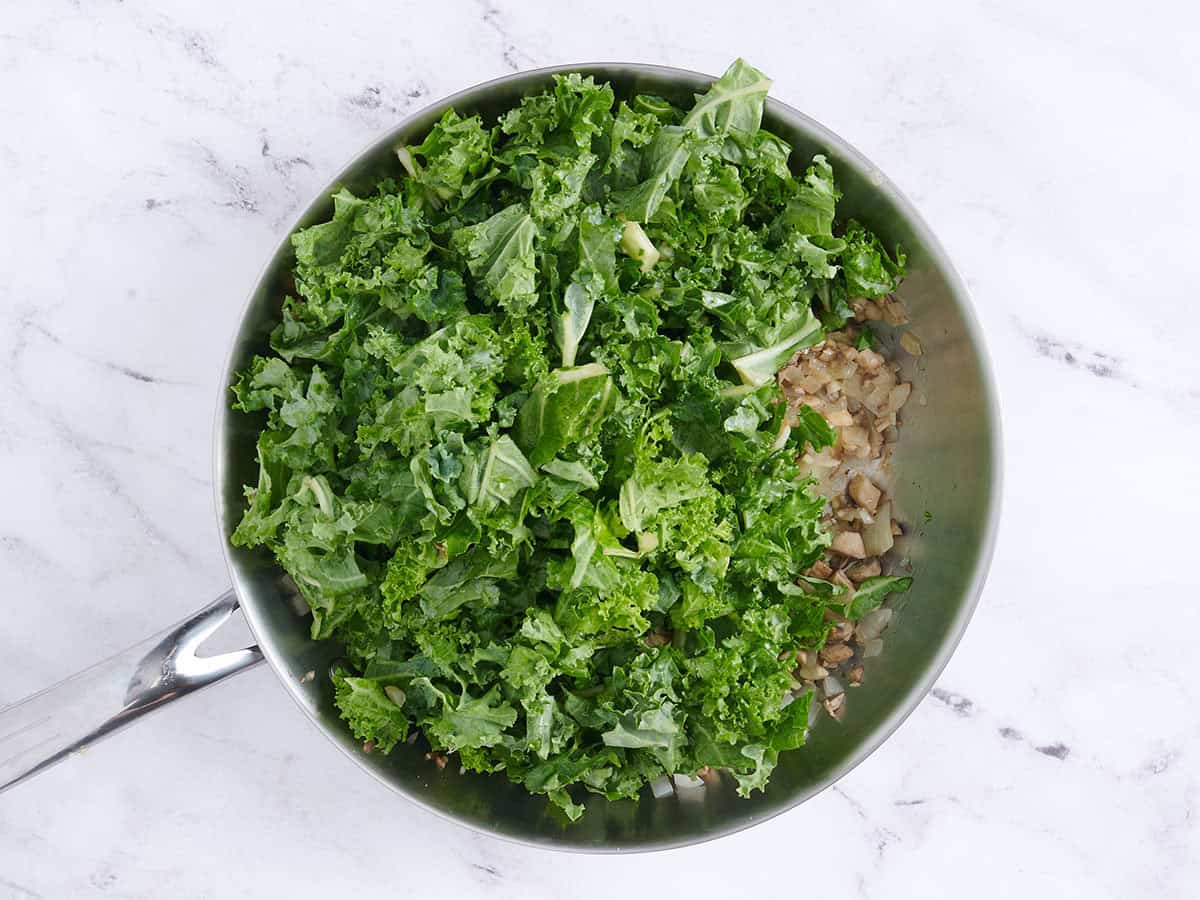
Wilt the kale: Add 4 cups chopped kale, the remaining ½ tsp salt, and remaining ¼ tsp black pepper. Cook until the kale is wilted and tender, and there is no liquid left in the skillet. Remove from the heat and set aside.
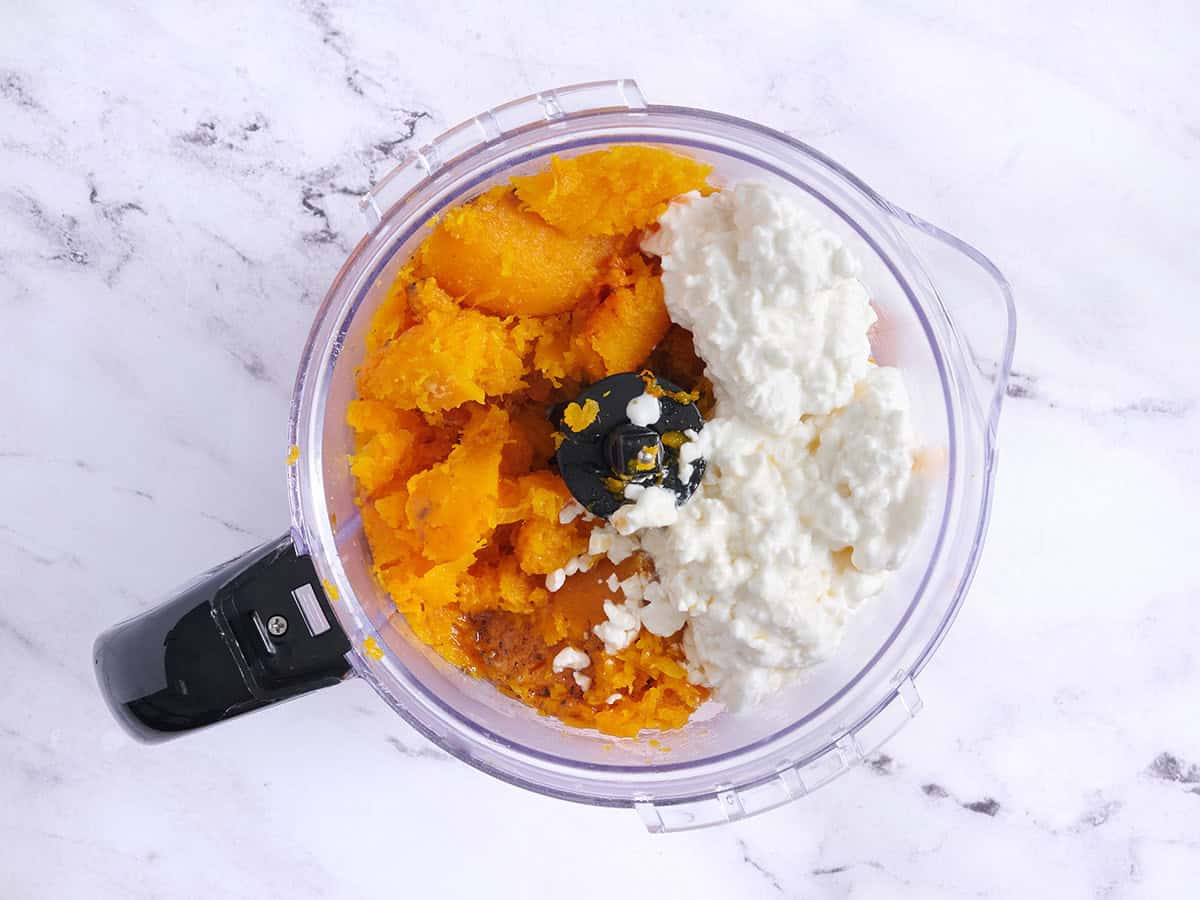
Blend the butternut squash sauce: Scoop the soft roasted butternut squash from the skin and transfer it to a blender or food processor. Add 1 cup cottage cheese and ½ cup vegetable broth, then blend until completely smooth and creamy. The mixture should be thick but easy to spread.

Brown the butter: Melt 4 Tbsp butter in a saucepan over medium heat. Add 10 fresh sage leaves and gently swirl the pan as the butter melts and begins to foam. Watch closely as the milk solids turn golden brown and the butter develops a nutty, toasted aroma. Remove the pan from the heat as soon as it reaches this stage so the butter doesn’t burn. Let it cool slightly, then transfer the crisp sage leaves to a paper towel and set them aside for serving.
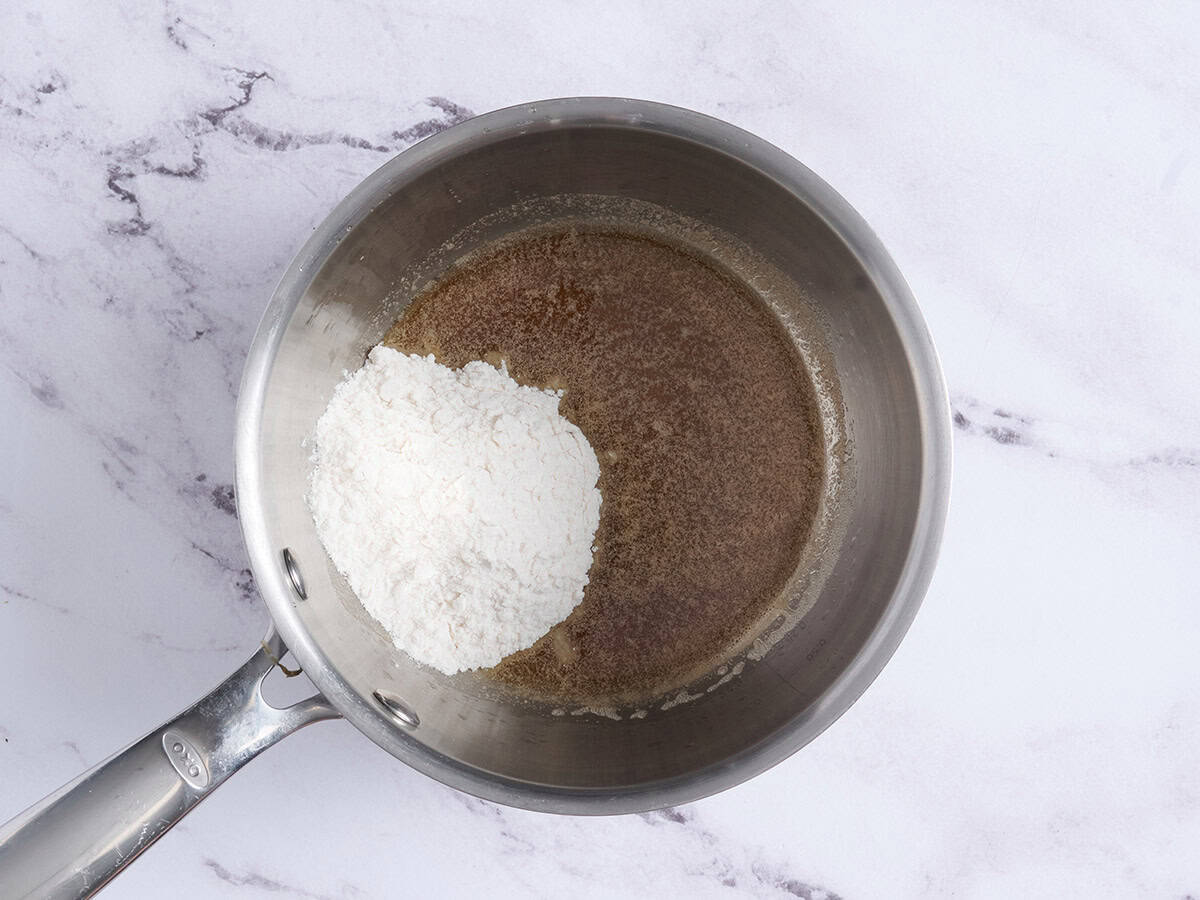
Start the brown butter béchamel: Return the saucepan of browned butter to medium heat. Whisk in ¼ cup all-purpose flour and cook for about 1 minute, whisking constantly, until smooth and lightly bubbling.
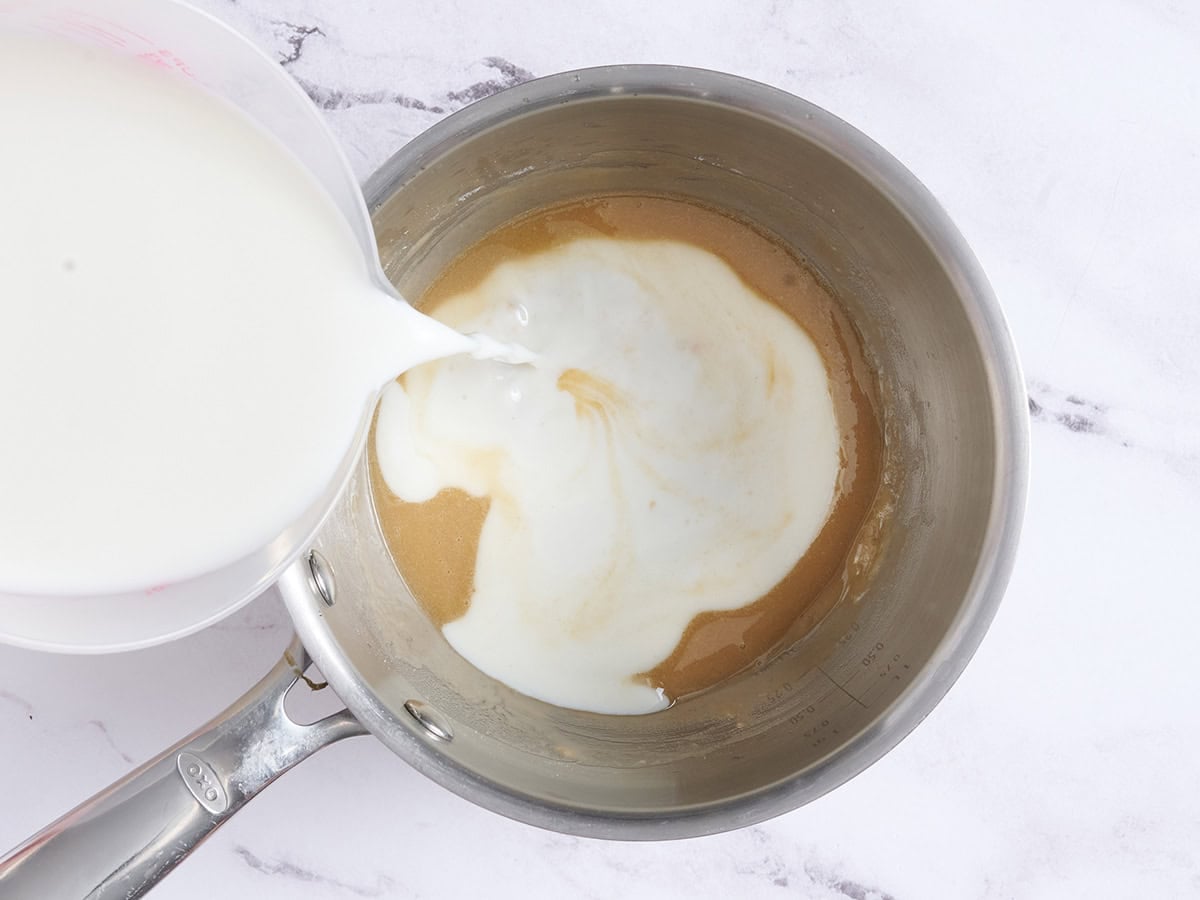
Slowly add the milk and thicken the sauce: Gradually pour in 3 cups whole milk, whisking continuously so the sauce stays smooth. Bring it to a gentle simmer and cook for about 5-6 minutes (don’t let it boil), whisking often, until the sauce thickens. It should be creamy and pourable, not stiff. If it becomes too thick while you assemble the layers, whisk in a small splash of milk to loosen it.
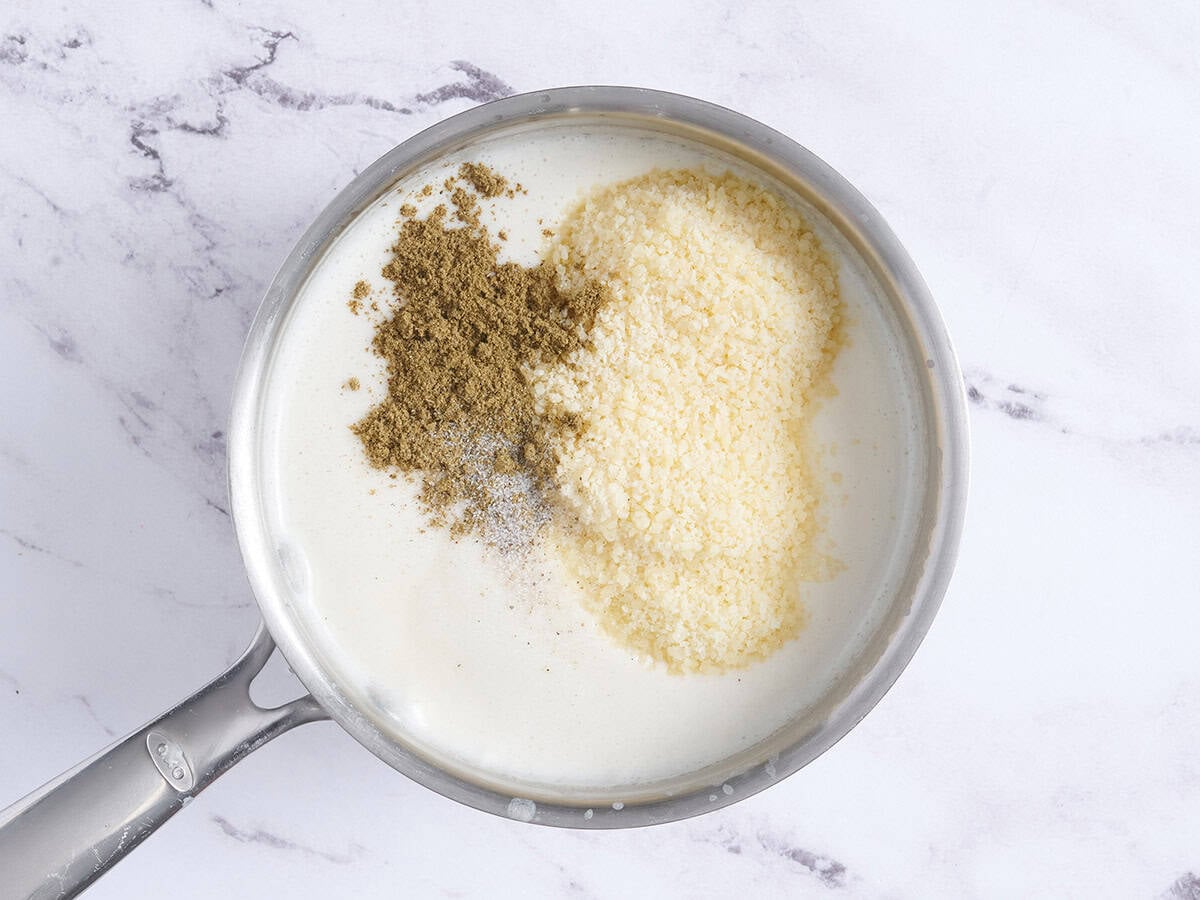
Finish the sauce: Stir in ½ cup grated Parmesan and the remaining 1 tsp poultry seasoning until the cheese has melted and the sauce is smooth. Remove from the heat and keep warm.
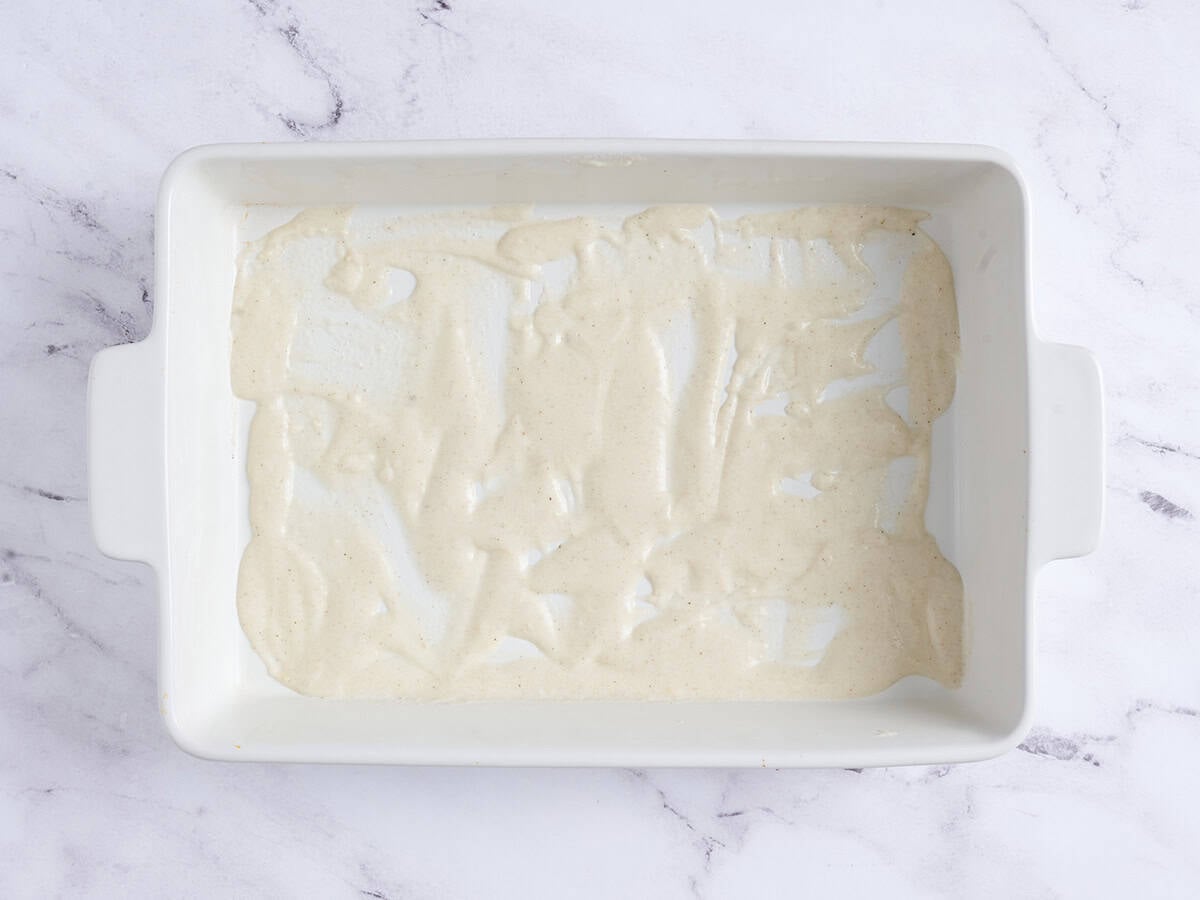
Lower the oven temperature and start assembling: Reduce the oven temperature to 375°F (190°C) and lightly grease a 9×13-inch baking dish. Spread a thin layer of béchamel over the bottom of the dish.
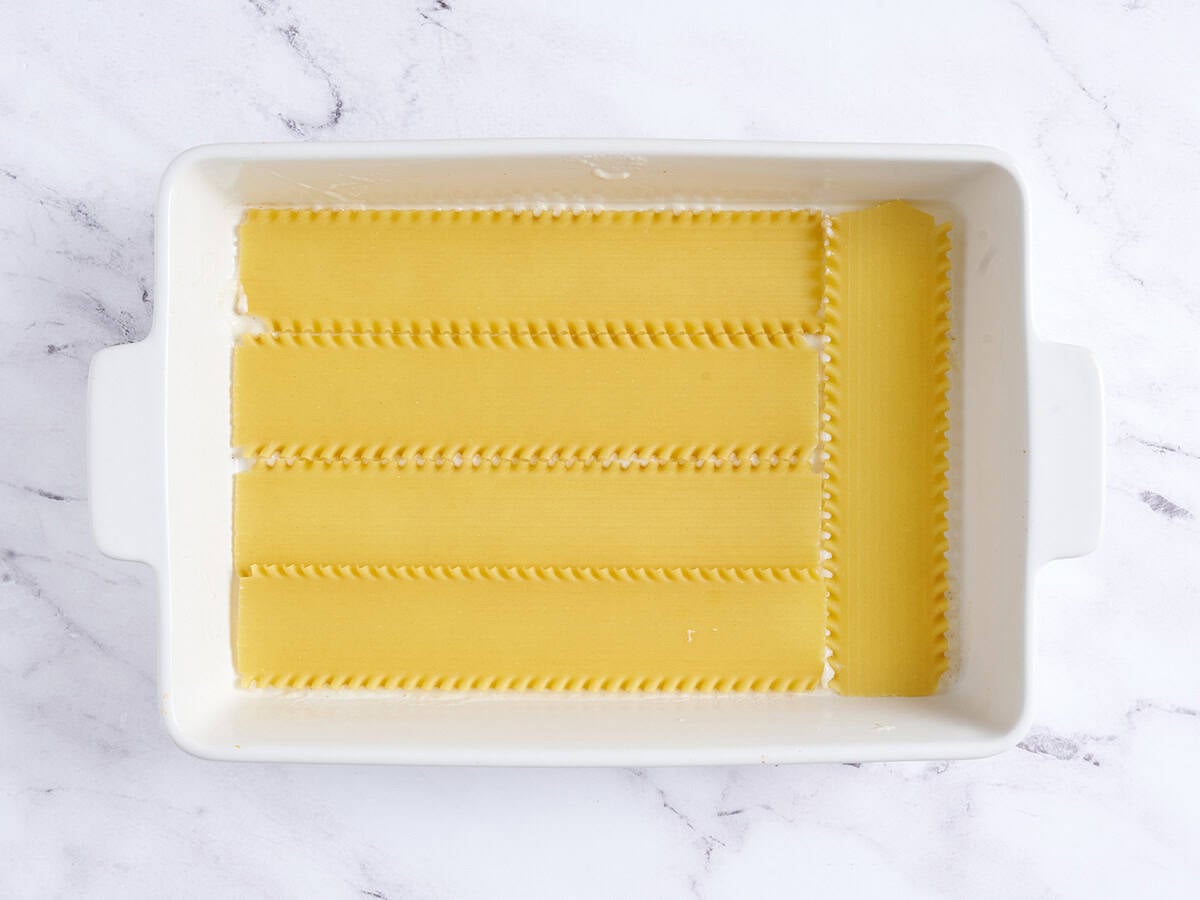
Now arrange a layer of oven-ready lasagna noodles over the sauce.
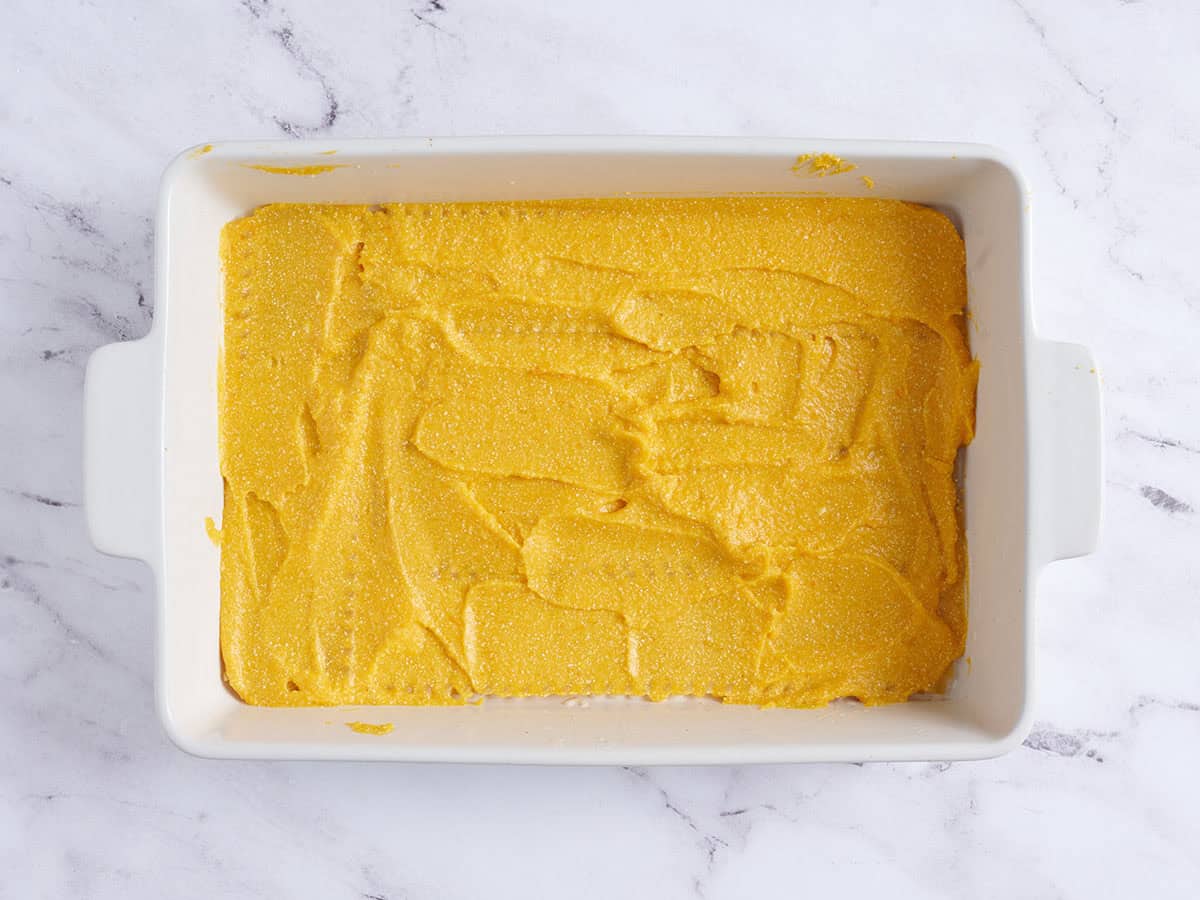
Spread a generous layer of butternut squash sauce over the noodles. Make sure the noodles are completely covered as you build the layers so they have enough moisture to cook through.
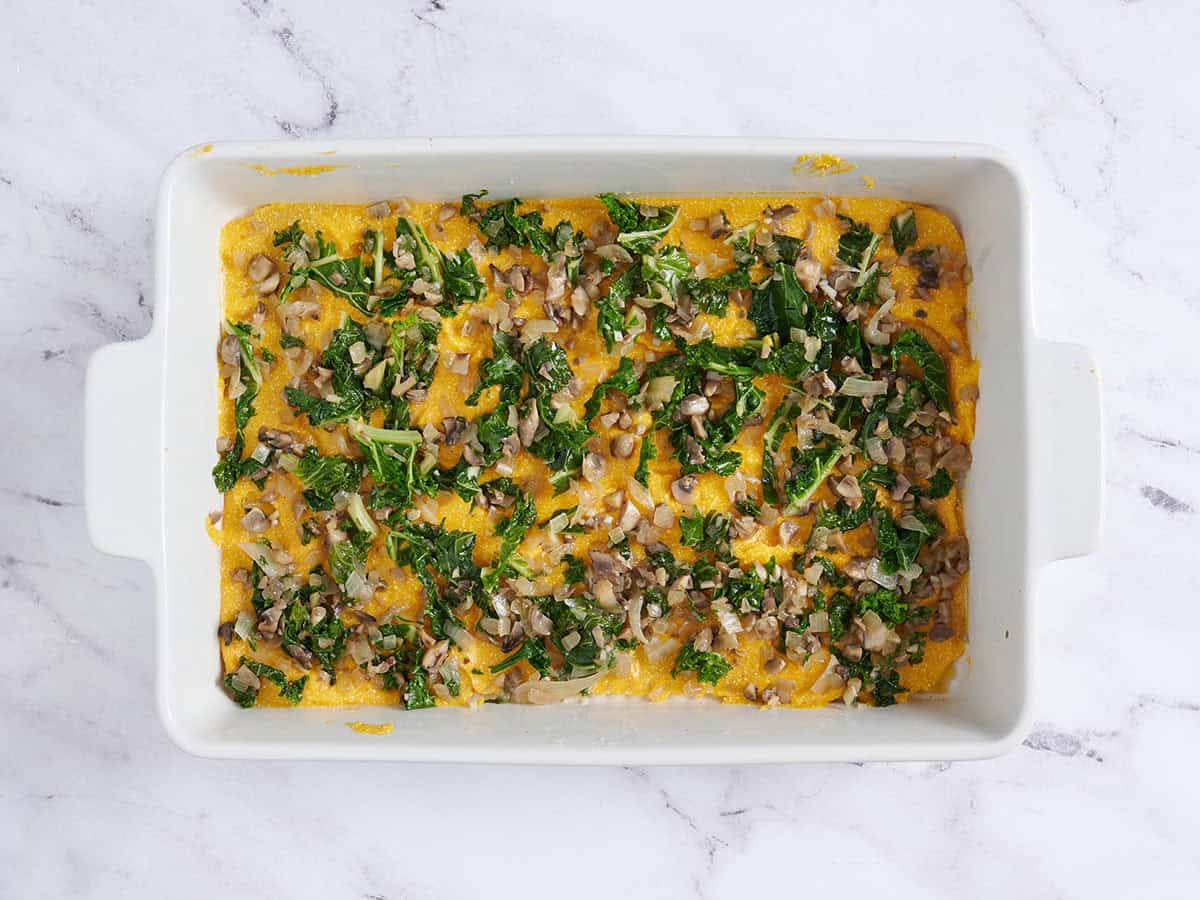
Top the butternut squash layer with some of the mushroom and kale filling.
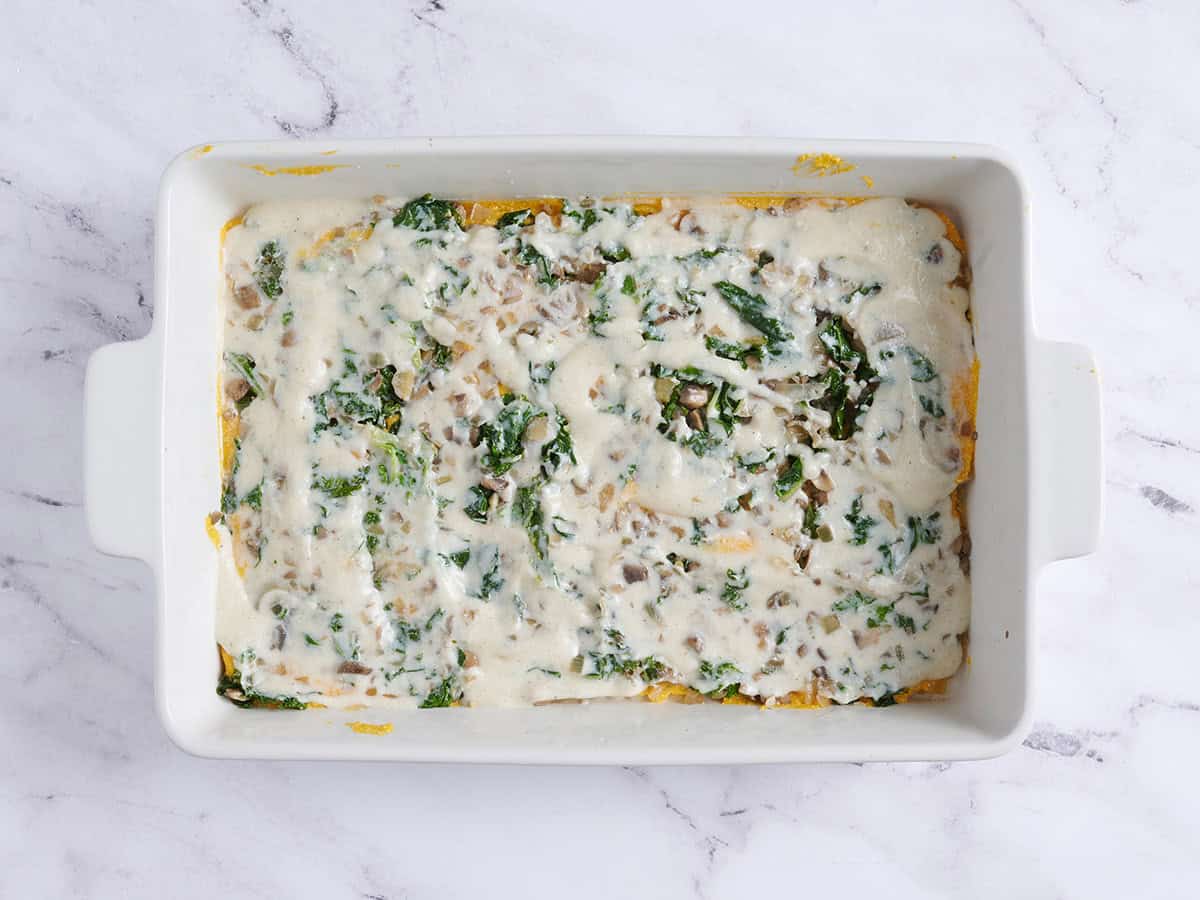
And then spread over more of the béchamel sauce…
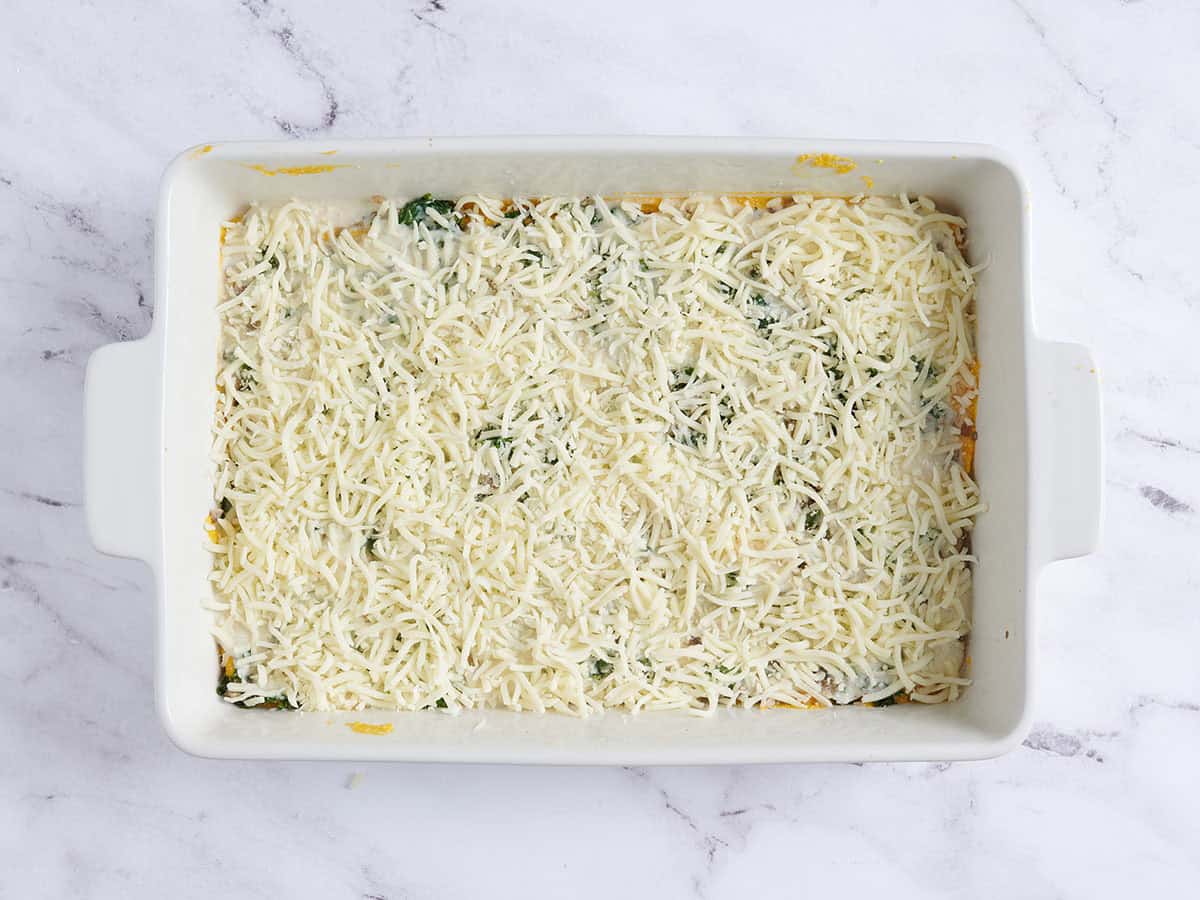
…and then sprinkle with mozzarella cheese.
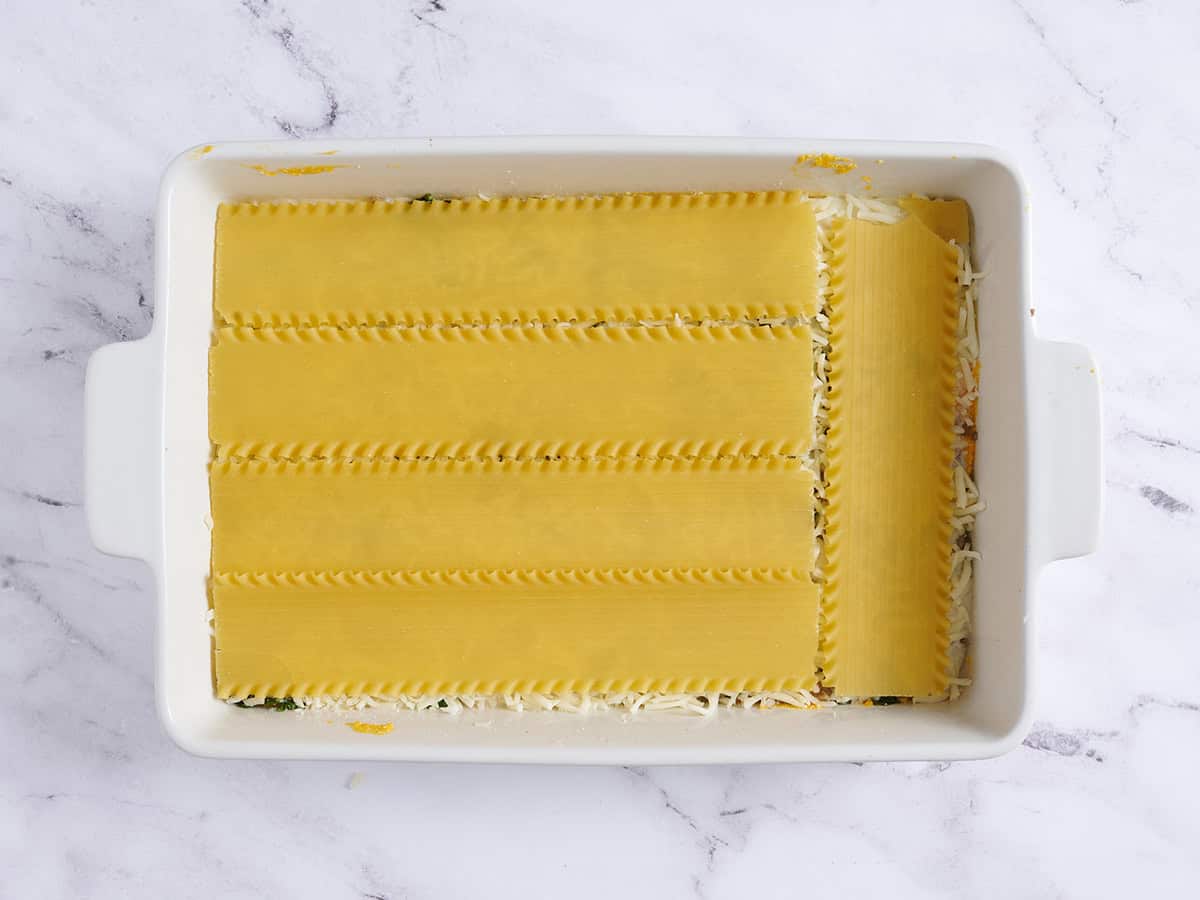
Repeat with another layer of noodles, squash sauce, mushroom-kale filling, béchamel, and mozzarella. As you go, keep enough béchamel and mozzarella aside to completely cover the top.
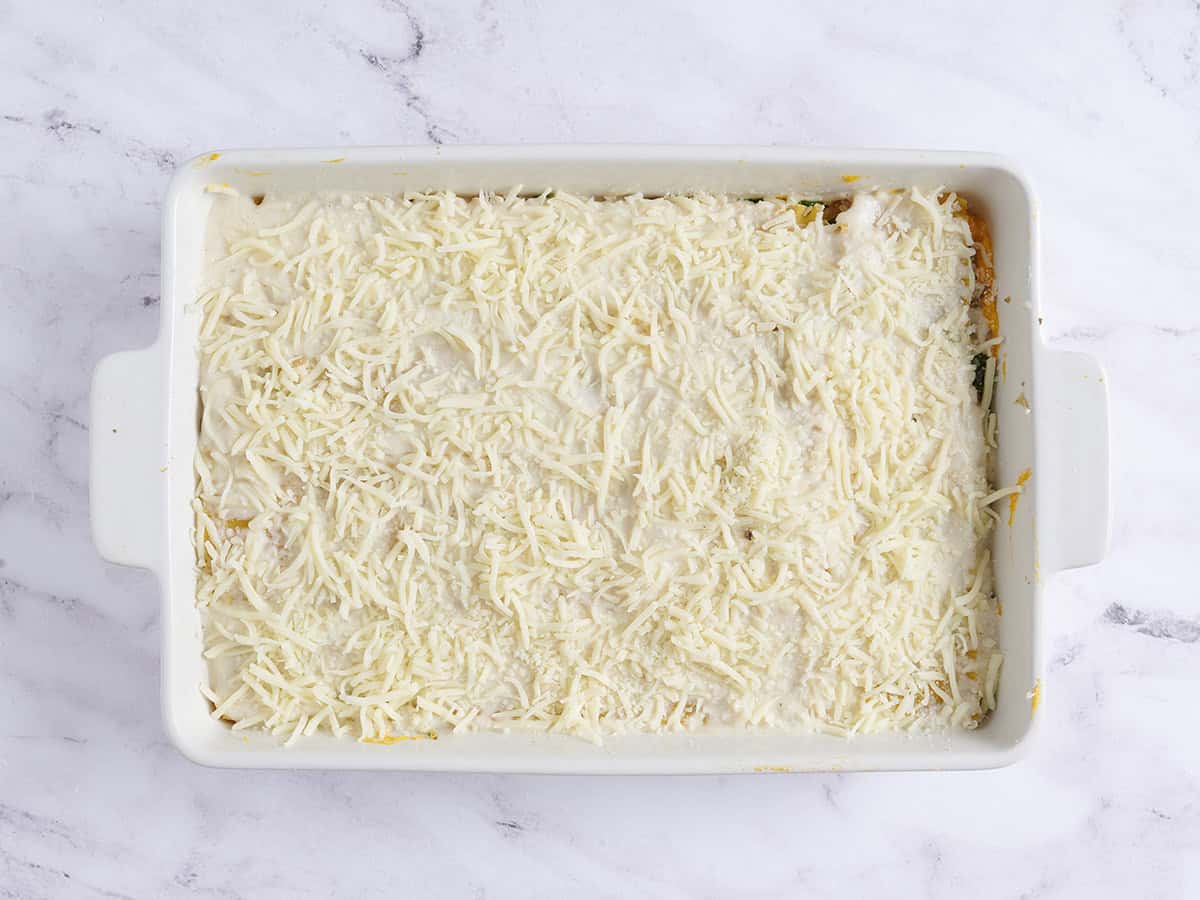
Finish the lasagna: Add a final layer of lasagna noodles, then cover them completely with the remaining béchamel and mozzarella. Pay special attention to the corners and edges so no sections of noodle are left exposed.
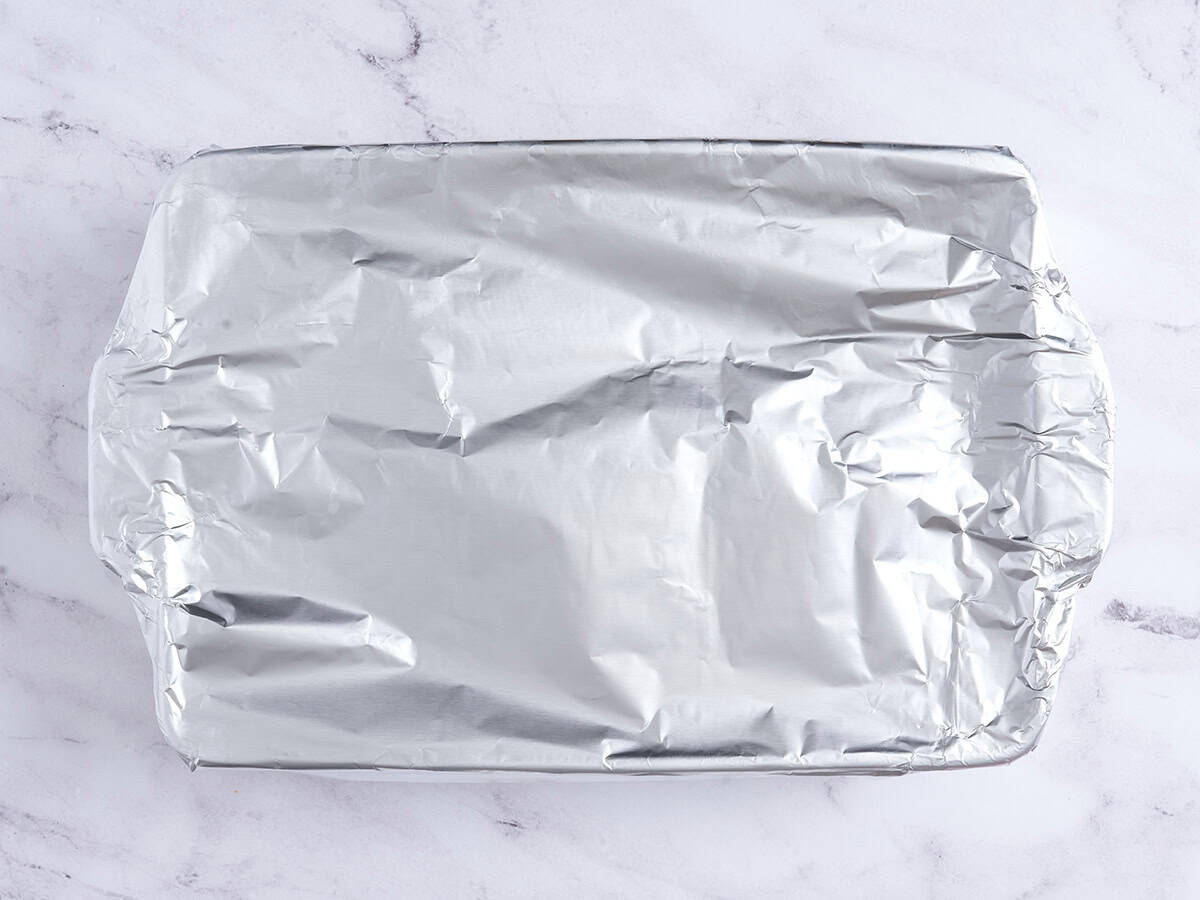
Bake covered, then brown the top: Cover the baking dish tightly with foil and bake at 375°F for 30 minutes. Remove the foil and continue baking for 10-15 minutes, or until the sauce is bubbling around the edges and the cheese on top is melted and golden.
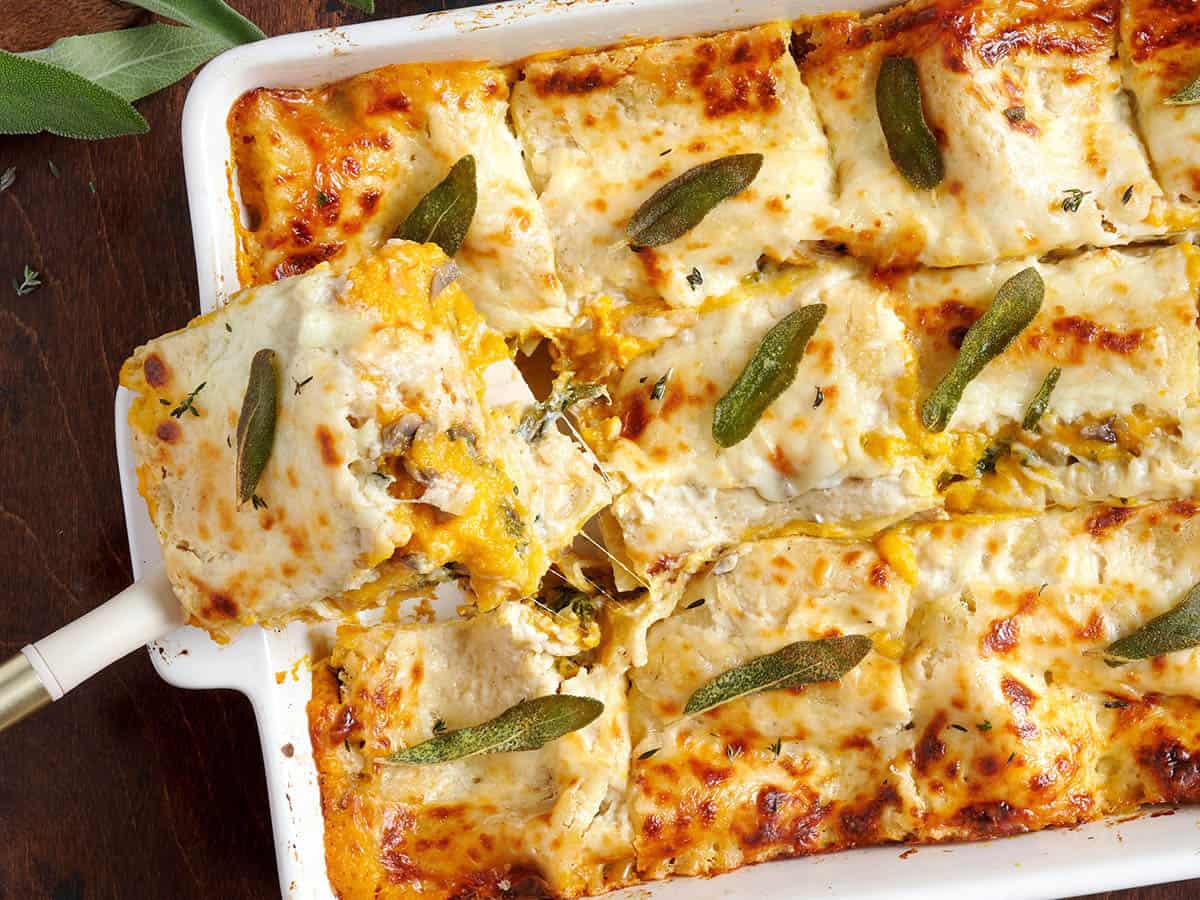
Rest before slicing: Let the lasagna rest for at least 10 minutes after baking. This gives the sauces and cheese time to settle and thicken slightly. Slice the butternut squash lasagna into portions and top each slice with one of the reserved crispy sage leaves. Enjoy!

How to Serve Butternut Squash Lasagna
This butternut squash lasagna is cheesy, saucy, and packed with savory fall flavors, so there are plenty of sides that fit right in. Steamed green beans or a quick bowl of steamed frozen peas are easy options when you don’t want to add much extra work. For a cozy family dinner, I’d add a crisp Caesar salad and some homemade cheesy garlic bread. The bread takes a little advance prep because the dough needs time to rise, but the actual bake is only about 15 minutes.
A side of veggies also makes this meal feel like a real full dinner. Roasted Brussels sprouts are a great fall option, or if I’m serving this for Thanksgiving or another holiday meal (it would be a great veggie main dish!), I’d go with glazed carrots. They’re made entirely on the stovetop in about 20 minutes, which keeps that valuable oven space free! Also, don’t forget to finish each slice with some of the reserved crispy sage leaves and an extra sprinkle of Parmesan, if you like.

Caesar Salad
$8.50 recipe / $1.42 serving

Homemade Cheesy Garlic Bread
$2.47 recipe / $0.49 serving
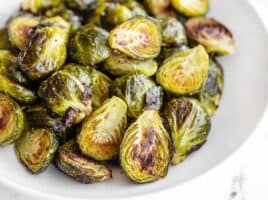
Easy Roasted Brussels Sprouts
$3.17 recipe / $0.79 serving

Glazed Carrots
$1.65 recipe / $0.41 serving
Storage & Reheating
Store leftover butternut squash lasagna in an airtight container in the refrigerator for 3-4 days. You can also cover the baking dish tightly if you’re storing several portions together.
Meal Prep
This dish is great for meal prep because it portions easily once chilled. I like to slice the cooled squash lasagna into individual servings and store them in separate containers for easy grab-and-reheat lunches or dinners throughout the week.
Reheating
For individual servings, microwave until warmed through. To reheat several portions at once, cover them with foil and warm in a 350°F oven for 10-15 minutes, or until hot in the center. Covering the lasagna helps keep the noodles and sauce from drying out.
Freezing
You can freeze this butternut squash lasagna either before or after baking. The noodles will soften slightly after freezing and thawing, and the sauce may not be quite as smooth, but it still reheats well.
- Freeze unbaked: Assemble the lasagna in a freezer-safe baking dish, cover it tightly, and freeze for up to 2 months. Thaw overnight in the refrigerator before baking as directed, adding a few extra minutes if needed to heat through.
- Freeze baked: Let it cool completely, then wrap the whole dish tightly or freeze individual slices for 1-2 months. Thaw overnight in the refrigerator, then reheat in the oven or microwave until warmed through.
Love Butternut Squash? Try These Recipes Next:
- When I want something warm and cozy, I’d go for this Butternut Squash Soup. It’s smooth, creamy, and perfect for chilly days.
- This Butternut Squash Curry simmers tender squash with curry spices, coconut milk, tomatoes, and spinach for an easy, budget-friendly dinner.
- For something a little lighter, this Butternut Squash Salad is a great way to pair roasted squash with fresh, crunchy ingredients!
- Our Stuffed Butternut Squash is exactly the sort of dinner I love. It’s hearty, savory, and filling enough to stand on its own.
See more of our favorite squash recipes here!
More Delicious Lasagna Recipes

Easy Homemade Lasagna
$16.19 recipe / $1.80 serving

Stovetop Lasagna
$9.99 recipe / $2.50 serving

Seafood Lasagna
$15.29 Recipe/ $1.70 Serving

White Chicken Lasagna
$17.34 recipe / $1.93 serving
The post Butternut Squash Lasagna appeared first on Budget Bytes.
PakarPBN
A Private Blog Network (PBN) is a collection of websites that are controlled by a single individual or organization and used primarily to build backlinks to a “money site” in order to influence its ranking in search engines such as Google. The core idea behind a PBN is based on the importance of backlinks in Google’s ranking algorithm. Since Google views backlinks as signals of authority and trust, some website owners attempt to artificially create these signals through a controlled network of sites.
In a typical PBN setup, the owner acquires expired or aged domains that already have existing authority, backlinks, and history. These domains are rebuilt with new content and hosted separately, often using different IP addresses, hosting providers, themes, and ownership details to make them appear unrelated. Within the content published on these sites, links are strategically placed that point to the main website the owner wants to rank higher. By doing this, the owner attempts to pass link equity (also known as “link juice”) from the PBN sites to the target website.
The purpose of a PBN is to give the impression that the target website is naturally earning links from multiple independent sources. If done effectively, this can temporarily improve keyword rankings, increase organic visibility, and drive more traffic from search results.
Streaming Film
Nonton Film gratis
Jasa Backlink
Download Anime Batch