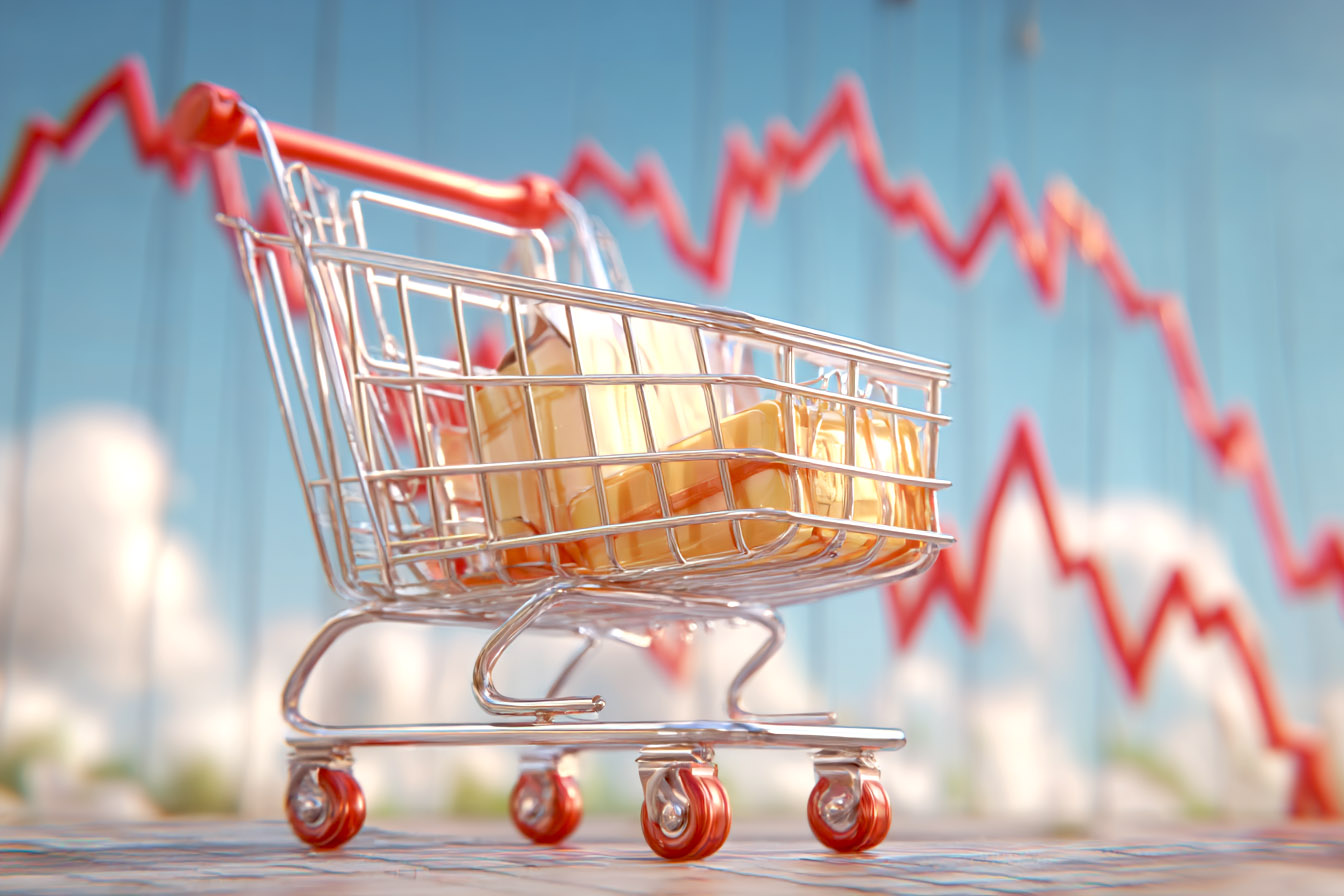
10 things you should not buy when the saving has broken down
When signs of economic uncertainty appear, warned buyers know that it is time to tighten their belts. Recent data shows that Americans are already making measured adjustments: consumer expenses in clothing and accessories stores dropped approximately 3.9% in annual sliding from January to the end of March 2025, with a single drop of 5.3%. The shoe market remained relatively stable in 2024, the overall sales remaining flat, while luxury fashion expenditure per household decreased from 9% from one year to the next in 2024. These figures suggest that people are more cautious with discretionary expenses.
Economic uncertainty does not mean a financial disaster, but it is an intelligent moment to review your expenditure priorities. When consumers become more cautious about their purchases, this creates an opportunity to create better financial habits and strengthen your position for the future. By being strategic concerning specific purchasing categories during uncertain times, you can improve your cash flows, reduce financial stress and be better prepared for everything that comes.
1. New vehicles
The purchase of a new car during uncertain economic deadlines means taking an important monthly payment when financial flexibility becomes more precious. The new vehicles lose substantial value when you drive them from the lot, and this depreciation occurs independently of the economic conditions. During periods of uncertainty, the immediate loss of value becomes even more problematic if you need to sell or exchange the vehicle quickly.
2. Luxury products and creative items
While luxury fashion expenditure has decreased by 9% as consumers become more selective, this category represents the simplest place to redirect money to more practical objectives. Luxury items, although beautiful and desirable, do not provide the same financial security as a well -funded emergency account or reduced debt. These purchases often represent important amounts that could make a real difference in your global financial image.
3. New major houses or real estate investments
Although real estate can be a good long -term investment, the calendar is enormously important. When labor markets become less predictable or economic conditions change, having significant mortgage may limit your flexibility to adaptation to changing circumstances. The costs of home ownership extend far beyond the mortgage payment itself. Land taxes, maintenance, insurance and unexpected repairs are added quickly. During uncertain moments, rental could actually offer more financial flexibility, allowing you to redirect money towards the construction of savings or other financial objectives.
4. Buying of debt and high interest credit
Taking a new high interest debt during uncertain times creates unnecessary financial pressure when flexibility becomes crucial. The credit card debt, with average interest rates higher by 22%, can quickly become overwhelming if your income decreases or your unexpected expenses occur. Monthly minimum payments on high interest debt can eat in your budget exactly when you need this money most. Refleted financial planning during uncertain times focuses on reducing monthly obligations rather than new ones.
5. Adjustable rate mortgages
Adjustable rate mortgages introduce payment uncertainty precisely when foreseeable expenses become more precious. Although these loans can offer lower initial rates, they transfer the lender’s interest risk of interest rate. During periods of economic uncertainty, when you may already be concerned about employment safety or income stability, unpredictable housing payments add unnecessary stress to your financial image. Fixed rate mortgages provide certainty of payment which becomes particularly useful during uncertain times.
6. Bulk and overtaking purchases
Although the purchase in bulk can save money per unit, it links species that could be more precious sitting in your bank account during uncertain times. The challenge is not the purchase in bulk itself, but the cost of opportunity to have this money unavailable for other purposes. When consumers are more cautious about expenses, maintaining liquidity becomes more important than reaching maximum efficiency on household items.
7. Extended guarantees and insurance supplements
Extended guarantees and additional insurance modules represent recurring expenses which add up in time without providing guaranteed value. Most prolonged guarantees cover items that rarely break or cost less to repair than the guarantee itself costs. Your money often works harder in a savings account, creating a self-assurance fund that you fully control. If the articles covered break, you will have money available to manage repairs. If nothing breaks, you keep the money instead of paying insurance premiums for the coverage you don’t need.
8. High -end electronic and technological upgrades
Technological improvements represent some of the most discretionary expenses in most budgets. Your current smartphone, laptop or tablet probably manages your daily needs, even if it is not the latest model. During periods of economic uncertainty, the extension of the lifespan of your current devices has more financial sense than pursuing the latest characteristics and capacities. Focus on maintaining what you already have rather than replacing it.
9. Pulse sales items and “offers”
Sales and customs clearance events can encourage you to spend money that you did not plan to spend, even when you try to be more careful with your budget. The psychology of “obtaining an agreement” can prevail over reasonable expenditure decisions, which leads to purchases which seem intelligent but which actually work against your financial objectives. It is not because something is reduced at a reduced price, buying it improves your financial situation. This 50% sweater is only a good value if you really needed a sweater and you budgeted for one.
10. Premium services and subscriptions
Subscription services can quietly drain your budget thanks to small automatic costs which are added to significant amounts over time. Our subscription economy is designed to make expenses invisible and automatic, but uncertain times require more visible and intentional spending decisions. Review all your subscriptions monthly and cancel everything that is not essential or actively improves your life. This $ 15 streaming service may seem small, but it is $ 180 per year that could go to the construction of your emergency fund or other financial priorities.
Case study: Brittany’s reflected expenditure adjustments
Brittany noticed the big economic titles and decided to review her upcoming purchases rather than panicking about her finances. She planned to upgrade her three -year -old car and had traveled new online models. After reflecting on the monthly payment compared to her current situation – no car payment and a reliable vehicle – she decided to keep her current car and put the money she would have spent instead in a high yield savings account.
She also examined her subscription services closely and discovered that she paid three streaming platforms but only used only one. The cancellation of unused subscriptions released $ 25 a month. Brittany did not face immediate financial pressure, but these adjustments felt smart and gave it more confidence in its financial situation. The money she redirected went in the construction of a greater emergency fund, which made her feel more prepared for everything that could happen.
Six months later, when a great opportunity arose at work which required additional training and certification, Brittany immediately had the money available to invest in itself. His colleagues who had continued their normal spending models were to either transmit the opportunity or put the costs on credit cards. Brittany’s reflected adjustments during uncertain times positioned it to take advantage of a career bypass that has strengthened its long -term financial prospects.
Main to remember
- Delay purchases of new vehicles during uncertain moments – keep your paid car well on the way instead of taking monthly payments.
- Luxury product expenditure can be redirected to the construction of emergency funds and financial security.
- Major real estate purchases add significant fixed expenses when flexibility becomes more precious.
- The high interest debt creates unnecessary financial pressure during periods when cash flows are most important.
- Adjustable rate mortgages add payment uncertainty when foreseeable expenses become greater.
- Bulk purchases buy species that could be more precious of liquid remaining in uncertain times.
- Extended guarantees and additional insurance modules add recurring expenses with no guaranteed value.
- Technology upgrades can be delayed – focus on maintaining current devices rather than the latest features.
- Sales items only provide value if they represent the planned purchases you really need.
- The subscription services quietly drain budgets and deserve a regular examination during uncertain economic periods.
Conclusion
Economic uncertainty does not require spectacular lifestyle changes, but this creates an opportunity to be more intentional to spend and strengthen your financial situation. The objective is not to stop spending entirely, but to redirect money from less important purchases towards building financial security and flexibility. Minor adjustments during uncertain times can be accompanied by significant improvements in your overall financial image.
The habits you develop during uncertain periods often persist long after improving economic conditions, creating sustainable advantages for your financial health. Being more selective on purchases, the construction of larger emergency funds and the reduction of unnecessary recurring expenses are precious practices whatever the economic conditions. When uncertainty gives way to stability and growth, you will be in a stronger position to benefit from new opportunities and take advantage of the things you have temporarily delayed, knowing that your financial foundation is solid.
Lifestyle
Game Center
Game News
Review Film
Berita Terkini
Berita Terkini
Berita Terkini
review anime
Gaming Center

Related Posts

Easy Potato Recipes

Classic Potato Soup