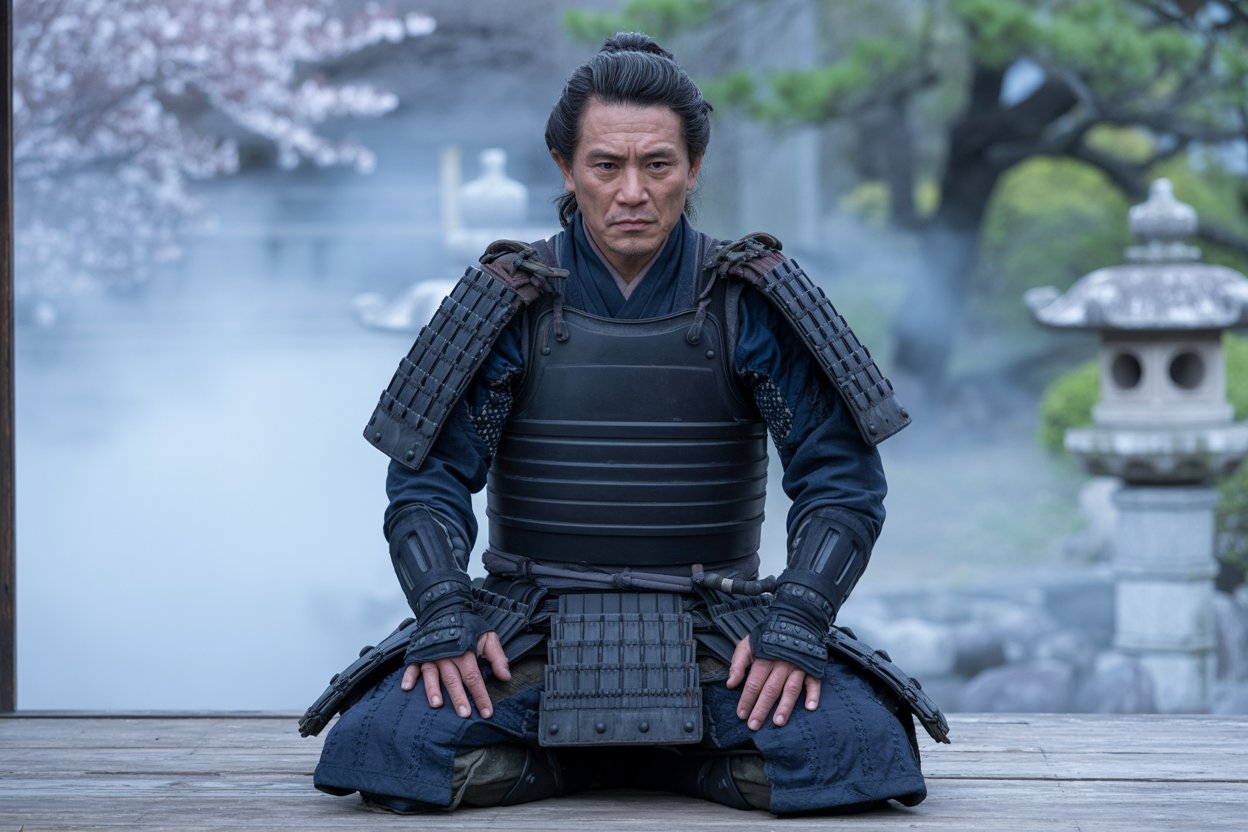
10 rules of samurai life to be mentally strong, according to Miyamoto Musashi
Miyamoto Musashi spent his life mastering the sword, winning sixty duels before the age of thirty, and eventually wrote “The Book of Five Rings” as a guide to strategy and mental toughness. His ideas weren’t just about fighting: they were about developing the kind of mental toughness that allows you to take on any challenge life throws at you.
The legendary swordsman wrote his treatise while living as a hermit in a cave, distilling decades of life and death experiences into principles that apply far beyond the battlefield. These are not abstract philosophical concepts but practical rules forged in the crucible of real conflict.
1. Cultivate perception without distortion
Musashi emphasized seeing things as they really are, not as you wish they were or fear they would become. He called this “seeing without attachment” – the ability to clearly observe reality without letting emotions, biases, or preconceptions cloud your judgment.
Mental toughness begins with honest assessment. When you face difficult situations, your mind naturally wants to either minimize the threat or catastrophize it. Both responses distort reality and weaken your ability to respond effectively. Train yourself to see circumstances exactly as they are, neither better nor worse than they really are.
2. Embrace relentless training
The Book of Five Rings makes it clear that mental strength cannot be manufactured by wishful thinking. Musashi trained every day, even after becoming Japan’s greatest swordsman. He understood that abilities are only developed through constant practice and not occasional effort.
You can’t build mental resilience by reading about it or thinking positively during comfortable times. You build it by deliberately doing difficult things, overcoming discomfort, and maintaining your training even when you don’t feel motivated. Strength grows through repetition, not inspiration.
3. Master multiple paths
Musashi deliberately trained with different weapons and studied various martial arts, refusing to become dependent on a single approach. He believed that relying on just one method created a weakness because circumstances could render that particular skill useless.
Mental strength requires versatility. When you develop multiple capabilities and can approach problems from different angles, you become much more resilient than someone with limited expertise. This doesn’t mean superficial dabbling: Musashi mastered every discipline he studied. It’s about avoiding mental rigidity by developing real skills in different areas.
4. Eliminate unnecessary movements
Every action Musashi took in battle had a purpose. He eliminated unnecessary flourishes and any movement that did not directly contribute to victory. This efficiency extended to his thinking: he got to the heart of the problems without getting lost in tangential concerns.
Mental strength requires this same economy of effort. Much of what people worry about, plan for, and mentally rehearse never really matters. Get into the habit of asking yourself if your current mental activity serves any useful purpose. If you go through scenarios that you can’t control, you’re wasting mental energy.
5. Keep your cool in chaos
The Book of Five Rings emphasizes keeping the same steady mind in the heat of battle as in calm circumstances. Musashi trained specifically to maintain this balance regardless of external conditions.
Most people only feel their mental strength when things are going well. The real test comes when circumstances become chaotic, when multiple problems arise simultaneously, when the stakes are high and time is of the essence. You can’t fake this ability: it only develops through exposure to truly stressful situations where you train yourself to maintain clear thinking despite pressure.
6. Engage fully when action is required
Musashi described the principle of “fording”: when you decide to cross a river at a particular point, you fully commit to that crossing. Lukewarm action in combat meant death, and he applied this same principle to all strategic decisions.
Mental weakness often manifests itself as hesitation or maintaining noncommittal positions. This divided state depletes mental energy and ensures poor results. Once you have determined the right path through careful assessment, commit fully to that path.
7. Study your failures ruthlessly
Musashi constantly analyzed his techniques and sought to understand precisely why specific approaches worked or failed. He didn’t make excuses or shift blame: he examined his own performance with brutal honesty to learn lessons that would make him stronger.
When things go wrong, weak minds immediately look for external explanations. Strong minds ask themselves what they could have done differently, what they failed to see, and how they can improve. It’s not about self-criticism, it’s about leveraging each experience to find useful information that will make you more competent in the future.
8. Understand the void
The final book in Musashi’s text explores the concept of emptiness or nothingness – the state beyond technique, where one responds naturally without conscious thought. This represents the highest level of mastery, where mental strength operates effortlessly because it has become your natural state.
You cannot force yourself into this state, but you can recognize it as the ultimate goal of mental training. The path to this level passes through all the other principles. You can’t achieve enlightened mental strength through shortcuts: it emerges naturally from years of dedicated practice.
9. Reject dependence on others
Musashi trained alone and fought alone, deliberately avoiding relying on others for his abilities. He understood that true strength must be self-generated and self-sustaining.
This does not mean isolation or withholding help. This means developing your own mental resources rather than needing constant external validation, support, or permission to act. Mental strength that depends on the presence or approval of others is not genuine: it is borrowed confidence that disappears when these accessories are removed.
10. Choose the direct path
Throughout The Book of Five Rings, Musashi advocates simple approaches rather than intelligent complexity. He valued frankness, simplicity, and getting to the heart of issues rather than skirting around them.
Mental toughness manifests itself in the willingness to face difficult things head on rather than avoiding them through elaborate rationalizations. The person who directly confronts uncomfortable truths, difficult conversations, and difficult situations develops far greater resilience than the person who constantly seeks easier paths.
Conclusion
Musashi’s principles of mental toughness require honest self-assessment, consistent effort, and the willingness to confront difficulties head-on. These are not techniques you can implement casually: they represent a fundamentally different approach to life.
The samurai understood that mental strength cannot be separated from the way one actually lives one’s life. The Book of Five Rings does not offer shortcuts to mental toughness, but the authentic path to developing an ability that withstands real pressure.
Lifestyle
Agen Togel Terpercaya
Bandar Togel
Sabung Ayam Online
Berita Terkini
Artikel Terbaru
Berita Terbaru
Penerbangan
Berita Politik
Berita Politik
Software
Software Download
Download Aplikasi
Berita Terkini
News
Jasa PBN
Jasa Artikel